
By Desmond Nleya
There are things life teaches us late and sometimes painfully late.
Lessons that would have changed everything if we had learned them earlier and one of the most overlooked among them is financial literacy.
We grow up in systems that celebrate academic excellence. We are taught how to read, write, calculate, and pass exams. Parents proudly invest in school fees, uniforms, and books, believing education is the key to a better future.
And it is but only partially. Because while we are taught how to make money, we are rarely taught how to manage it.
From an African perspective, this gap is deeply familiar. Many of us were never taught how to handle money, how to save, how to invest, or even how to spend wisely. Yet, without financial literacy, earning money alone is not enough. There is a quiet but dangerous illusion that income equals wealth.
It does not.
Having money and understanding money are two very different things.
This explains why so many people work their entire lives and still struggle. They wake up early from a young age, pushed into a system that runs like a script: go to school, study hard, get a job, earn a salary.
From as early as five years old, the routine begins. Sixteen to twenty years of education later, the dream becomes employment, not financial independence.
Then comes the cycle.
You get a job. You earn. You spend. You hope for a salary increase. You support family. You repeat. Year after year, the cycle continues, work, spend, survive. Many hold onto the hope that “one day” things will change. But for most, that day never comes. Thirty years later, they look back and realize they were busy, but not free. Earning, but not building.
This is not a failure of effort. It is a failure of knowledge.
Financial literacy changes that narrative. It teaches that money is not just for spending but it is a tool. A resource that, when managed wisely, can grow, multiply, and create freedom. It teaches the difference between assets and liabilities, between needs and wants, between short-term pleasure and long-term security.
So why wait until adulthood to learn this?
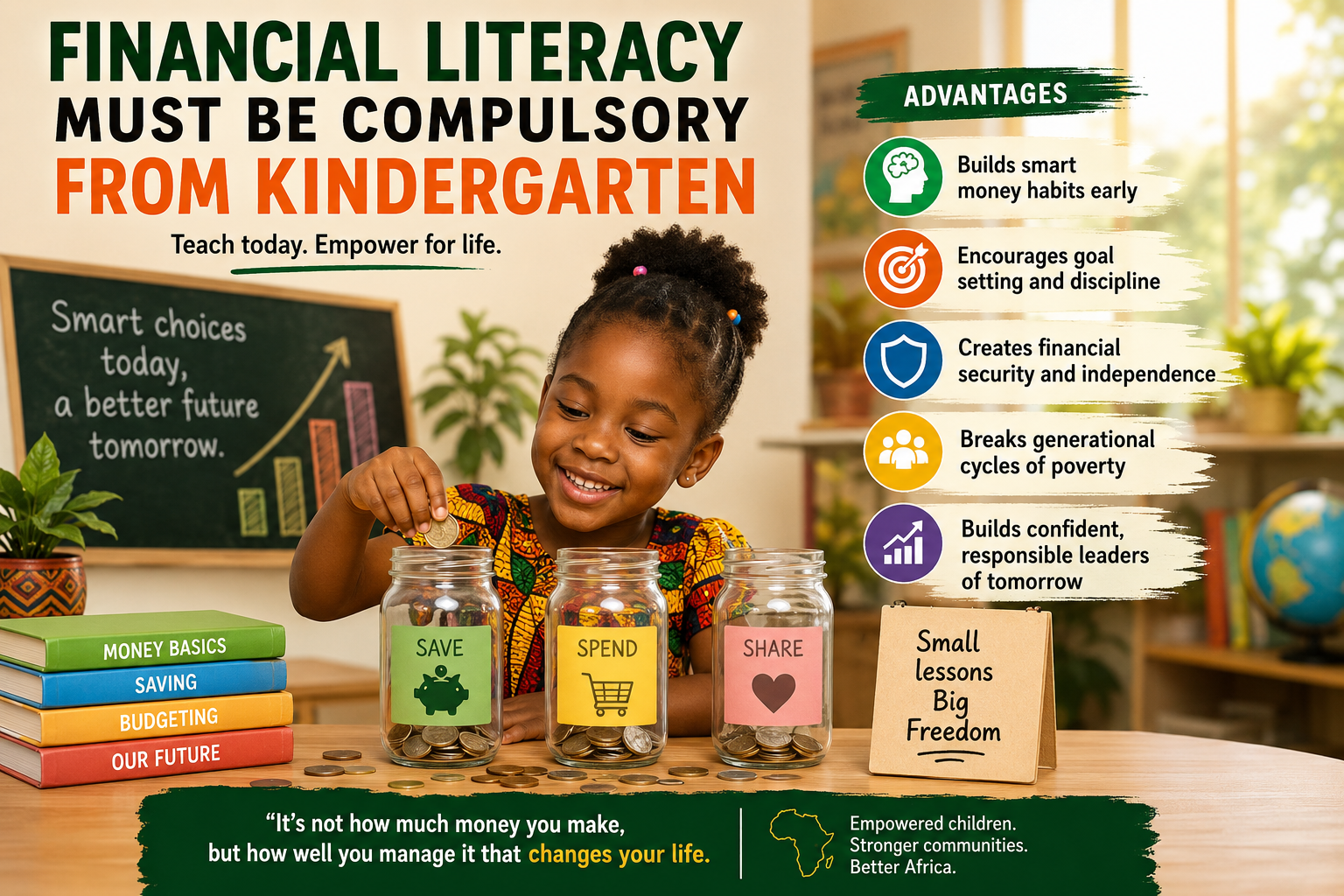
Children are more capable than we think. In fact, the earlier they are introduced to financial concepts, the more naturally these habits become part of their lives. Teaching financial literacy from kindergarten is not about turning children into accountants, it’s about shaping their mindset.
A five-year-old can understand the basics of saving. Give them a small allowance and show them how to divide it, some to spend, some to save. Let them set simple goals, like saving for a toy, so they experience the reward of patience.
As they grow older, the lessons can evolve. Teach them about budgeting: how to plan their money instead of reacting to it. Introduce the idea of earning, not just receiving. Encourage small responsibilities or entrepreneurial thinking, like selling homemade crafts or helping with small tasks for rewards.
Teenagers can learn about banking, investing, and even basic financial tools. Concepts like interest, debt, and long-term planning should not be foreign to someone entering adulthood.
By the time they are ready to work, they should not just be thinking about how much they will earn, but how they will use it.
The advantages are profound.
Financially literate children grow into adults who are less dependent, more confident, and better prepared for life’s realities. They are less likely to fall into cycles of debt. They understand delayed gratification. They build wealth instead of chasing it blindly. Most importantly, they gain control over their lives.
This is how generational cycles are broken.
When a child understands money, they don’t just change their own future-they influence their family, their community, and eventually, society. Financial literacy becomes more than a skill; it becomes empowerment.
The world has spent decades boosting academic literacy and technological literacy. It is time we give financial literacy the same urgency.
Because education should not only prepare children to pass exams but it should prepare them to live well.
And that preparation must start early.