
By Desmond Nleya
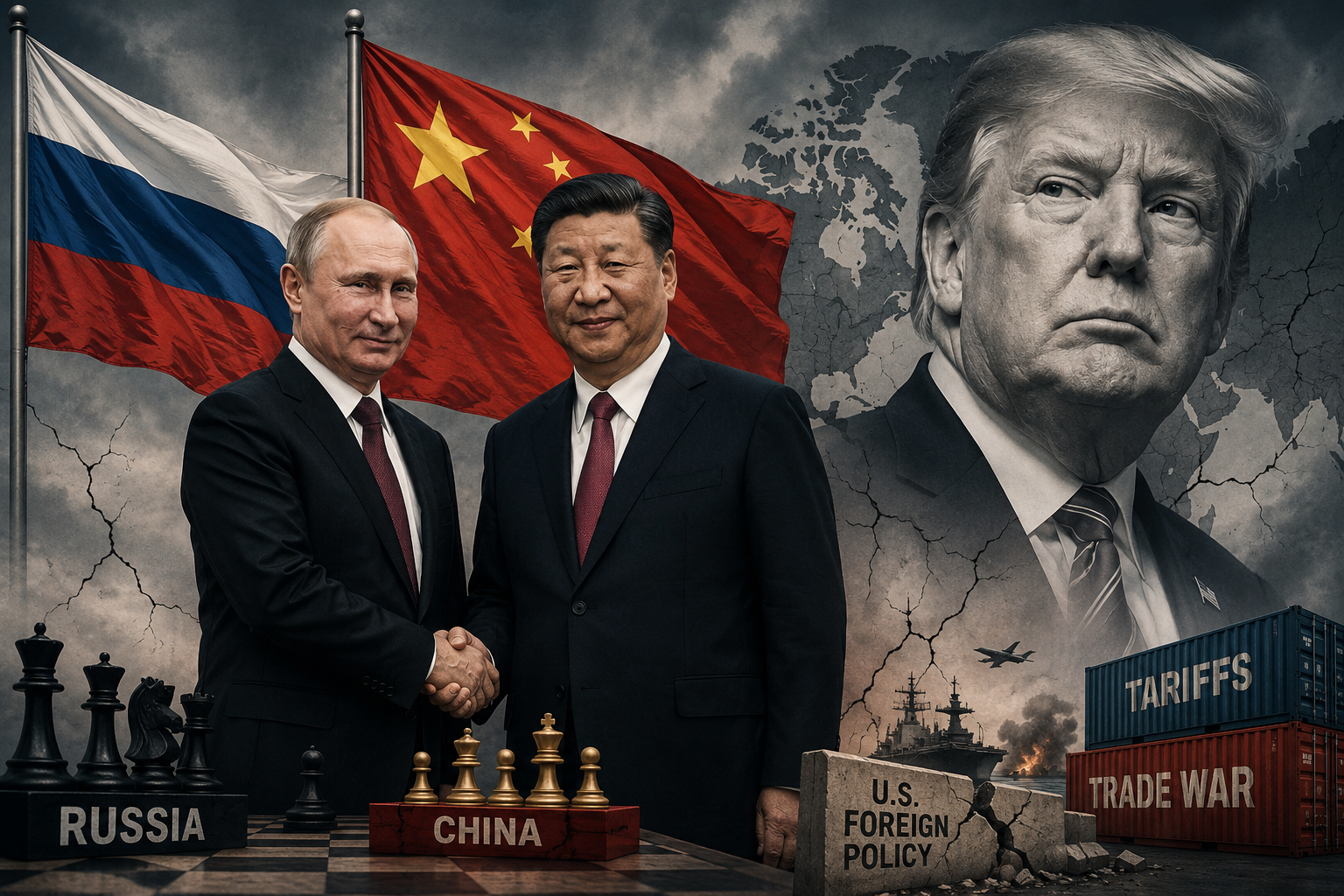
DUBAI- Donald Trump once claimed he would “un-unite” China and Russia, arguing that the United States under Joe Biden had pushed the two powers into each other’s arms. Yet less than two years into his return to the White House, the opposite appears to be happening. Far from weakening ties between Beijing and Moscow, Trump’s erratic foreign policy, aggressive trade posture, and contradictory military strategies have accelerated the emergence of a deeper and more strategic Sino-Russian partnership.
Today, China and Russia are not merely cooperating out of convenience; they are increasingly acting like two powers bound by a shared sense of survival against what they see as an unpredictable and destabilising United States.
The irony is striking. Trump entered office promising to end wars, reset relations with Moscow, and force Beijing into economic concessions. Instead, his administration has managed to antagonise both simultaneously. His foreign policy has become defined by inconsistency — threatening China with economic warfare while attempting half-hearted diplomacy with Russia, all while backing military escalations in regions critical to both nations’ strategic interests.
The ongoing Iran conflict has only cemented this alliance further. The instability in the Middle East and threats around the Strait of Hormuz have pushed China to rely even more heavily on Russian energy supplies. Moscow, meanwhile, benefits enormously from Beijing’s economic lifeline, technological exports, and expanding trade relations at a time when Western sanctions continue to bite.
This is no longer a symbolic partnership. It is becoming structural.
Trade between the two countries continues to surge, energy cooperation is deepening, and discussions around long-delayed infrastructure projects such as the Power of Siberia 2 pipeline are regaining momentum. Chinese technology and industrial exports have also become crucial in helping Russia sustain its military and economic resilience amid the war in Ukraine.
But economics alone does not explain the growing closeness between Xi Jinping and Vladimir Putin.
What truly binds them together is a shared conclusion: that the United States under Trump has become strategically reckless.
From Beijing’s perspective, Washington is simultaneously escalating tensions with Russia over Ukraine, provoking China over trade and Taiwan, and supporting Israel’s military campaigns across the Middle East. To Chinese and Russian strategists, this is not the behaviour of a stable global power carefully managing world order. It is the behaviour of a superpower overstretching itself while acting impulsively.
Trump’s biggest mistake may have been believing that pressure alone could fracture the relationship between Moscow and Beijing. History suggests otherwise. Russia and China have had deep rivalries in the past, including border disputes and ideological conflicts during the Cold War. Their alliance was never automatic or inevitable.
However, US policy over the past two decades — from NATO expansion to trade wars and military brinkmanship — has steadily removed the incentives for distrust between them. Trump has simply accelerated that trend through a foreign policy that often appears reactive rather than strategic.
His administration speaks about peace in Ukraine while continuing policies that fuel confrontation. It talks about reducing global tensions while simultaneously escalating economic warfare with China. It criticises endless wars yet becomes entangled in another volatile Middle Eastern conflict.
To Moscow and Beijing, these contradictions reinforce one message: neither country can afford to stand alone against Washington.
Xi Jinping’s decision to host Putin shortly after engaging Trump is therefore more than diplomatic theatre. It is a carefully calculated signal. China is effectively telling the world that despite US pressure, sanctions, tariffs, and military posturing, the partnership with Russia is not weakening — it is hardening.
Trump wanted to divide Russia and China. Instead, his unpredictable and often contradictory foreign policy may go down as one of the biggest reasons the two powers have become more united than ever before.