
By Desmond Nleya
The outbreak aboard the MV Hondius reopened debates first seen during COVID-19 about wealth, travel, and who ultimately suffers during global health crises. The incident highlighted how diseases often move through the pathways of global privilege, carried by tourists, business travellers, and affluent individuals with the freedom to cross borders easily.
Back in early 2020, one of Spain’s first confirmed COVID-19 cases involved a German tourist vacationing in the Canary Islands. Investigators later discovered he had been exposed to an infected business associate in Germany before travelling abroad. That moment symbolised a larger reality of the pandemic: international mobility among wealthy travellers accelerated the global spread of disease.
Throughout the early stages of COVID-19, outbreaks were repeatedly linked to luxury travel, ski resorts, corporate trips, and cruise ships. Researchers noted that modern transportation networks allowed viruses to circulate rapidly across continents, with affluent travellers often acting as the first carriers into new regions.
This pattern also shaped public perception. In Mexico, a governor controversially claimed that COVID-19 mainly threatened the rich because several wealthy bankers had reportedly returned infected from a ski trip in Colorado. Although the statement was inaccurate and misleading, it reflected how the virus initially spread through elite social circles before reaching wider populations.
However, outbreaks rarely remain limited to the wealthy. Once diseases establish themselves in communities, poorer populations usually face the greatest danger. During COVID-19, many affluent families isolated in comfortable homes or worked remotely, while working-class people continued using crowded transport systems and working in high-risk environments. In many cases, the privileged benefited from mobility while the vulnerable carried the burden of exposure.
Pandemics therefore expose the inequalities built into globalisation itself. Those with money and freedom of movement often contribute disproportionately to the international spread of disease, while those with fewer resources experience the harshest consequences.
Social class has always influenced how diseases are perceived. Tuberculosis was once romanticised because many artists and intellectuals wrote about it, whereas illnesses like Ebola and HIV/AIDS became associated with poverty and social marginalisation. Even so, modern outbreaks continue to reveal how international travel by elites plays a major role in disease transmission.
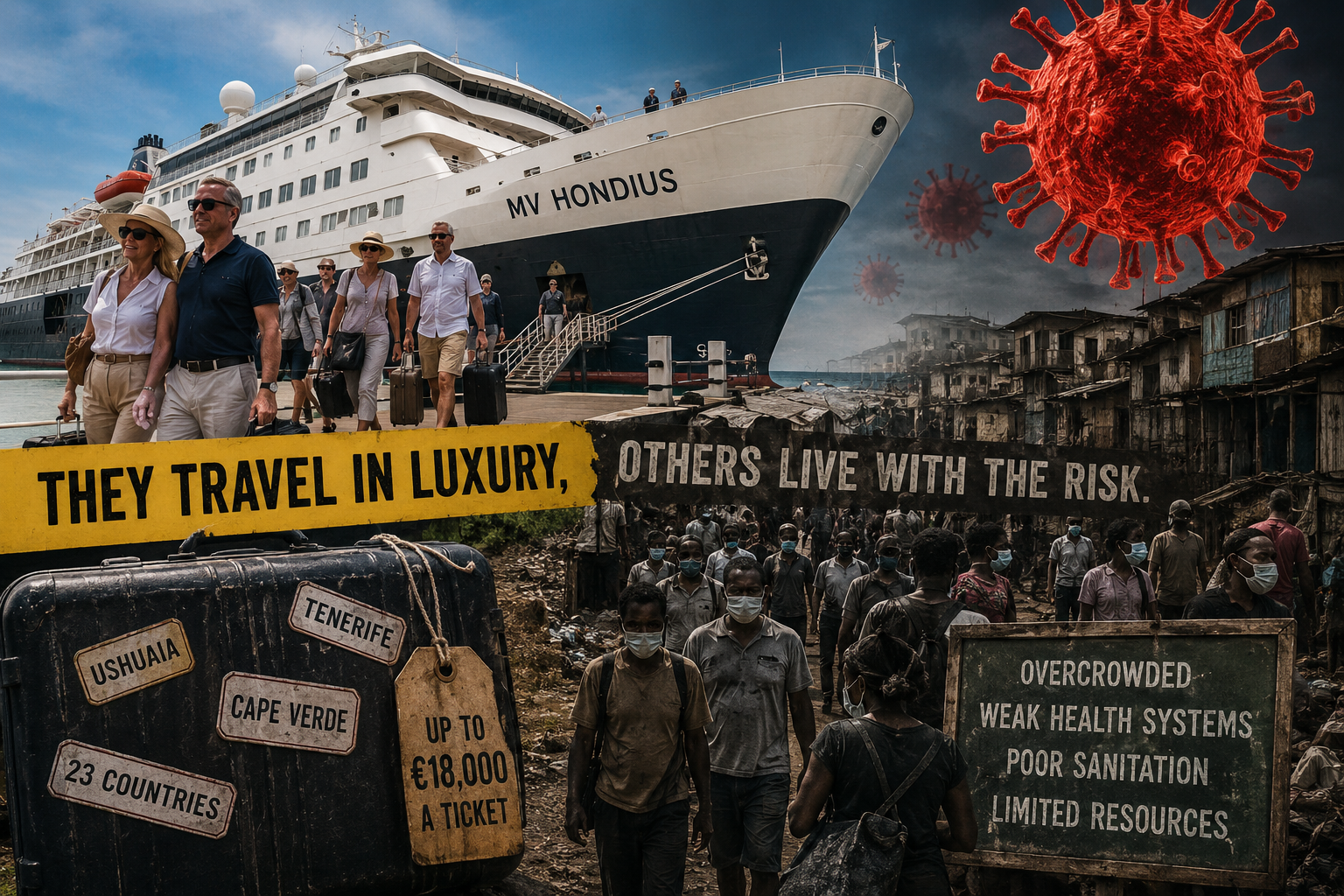
The recent hantavirus scare involving the MV Hondius revived these concerns. The luxury cruise departed Argentina carrying passengers from more than 20 countries, some paying tens of thousands of euros for the voyage. What began as an exclusive expedition soon turned into an international health emergency after multiple infections and deaths were linked to the ship.
As the vessel neared the Canary Islands, Spanish authorities hesitated to allow docking, fearing infected rodents on board could introduce the virus ashore. Although experts later reduced those concerns, the incident reflected broader anxieties surrounding global travel and public health: when wealthy travellers move freely across borders, local communities may ultimately face the greatest risks.
Since COVID-19, criticism of elite tourism has expanded beyond environmental concerns such as carbon emissions. Many now also question the public health consequences of unrestricted international mobility. Poorer nations and communities remain especially vulnerable because of overcrowded living conditions, fragile healthcare systems, water shortages, and climate-related pressures that worsen disease outbreaks.
This creates a difficult political and ethical debate. Should wealthy societies and affluent travellers take greater responsibility for the risks associated with global mobility?
The MV Hondius incident demonstrated that inequality continues to shape global health outcomes. Even during emergencies, privilege influences who receives protection, treatment, and safe return home. Wealthier passengers were able to access medical care and monitoring, while regions potentially exposed to infection were left to manage uncertainty and possible consequences.
Ultimately, the story reflects a broader truth about globalisation: the world’s wealthiest people remain the most mobile, but they are often shielded from the full impact of the risks their mobility can create for others.