
By Desmond Nleya
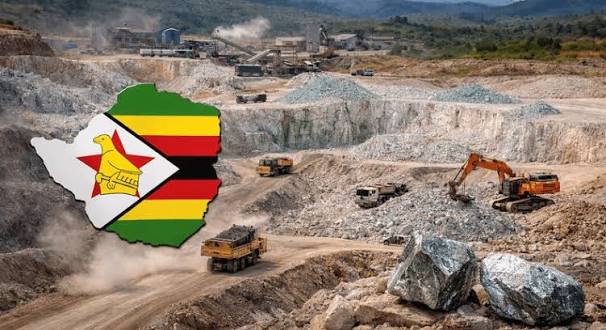
HARARE- Zimbabwe has taken a major step toward industrialisation with the launch of Africa’s first lithium sulphate processing plant, reinforcing its position as the continent’s leading lithium producer and reducing reliance on raw mineral exports.
The new facility, located in Goromonzi, about 30 kilometres east of Harare, was developed by Chinese-owned Prospect Lithium Zimbabwe (PLZ) at a cost of approximately $400 million. The plant became fully operational in May and marks a significant milestone in Zimbabwe’s strategy to add value to its vast mineral resources before export.
Speaking at an industrialisation conference this week, President Emmerson Mnangagwa reaffirmed the government’s commitment to ending the export of unprocessed minerals.
“We will no longer tolerate the raw exportation of our wealth,” he said. “We would rather leave our valuable minerals underground than export them without processing them locally.”
Earlier this year, Zimbabwe suspended exports of raw lithium concentrates and announced a full ban on such exports beginning in January 2027. The policy requires mining companies to process lithium within the country, encouraging investment in local industries and increasing the value of mineral exports.
Most of Zimbabwe’s lithium production has traditionally been shipped to China, the world’s largest producer of electric vehicles and lithium-ion batteries. The new processing plant enables Zimbabwe to move further up the battery materials supply chain by producing lithium sulphate, an essential intermediate product used in battery manufacturing.
Mines and Mining Development Minister Polite Kambamura described the project as a historic achievement for both Zimbabwe and Africa.
“The construction of Africa’s first lithium sulphate plant was completed here in Zimbabwe, and we are proud of this milestone as we continue promoting local value addition and beneficiation,” he said during a recent tour of the facility.
Kambamura also revealed that PLZ is close to completing a lithium carbonate refinery, which represents the next stage in lithium processing. The government’s long-term ambition is to establish local manufacturing of lithium batteries and solar panels.
“We will only be satisfied when Zimbabwe is producing lithium batteries and solar panels,” he said.
Beyond lithium, Zimbabwe plans to extend its beneficiation policy to 13 other critical minerals, including cobalt, platinum group metals, and rare earth elements. From next year, these minerals will also be prohibited from being exported in raw form.
Government spokesperson Nick Mangwana said the new policy is designed to ensure Zimbabwe’s natural resources generate lasting benefits for future generations.
“Our minerals are finite resources, and we want future generations to benefit from them through industrial development rather than simply exporting raw materials,” he said.
The government has also introduced reforms in the gold mining sector, announcing that only indigenous Zimbabweans and locally owned companies will be permitted to operate small- and medium-scale gold mines. Officials say the move is intended to promote broader participation by local communities in the country’s mining industry.
Industry analysts believe Zimbabwe’s beneficiation strategy is already attracting significant investment. Public policy expert Tedious Ncube noted that more than $1 billion has been committed to the lithium sector since the export restrictions were introduced.
He said policies that encourage local processing attract manufacturing investment, create employment opportunities, increase export earnings, and ensure a greater share of mining profits remains within Zimbabwe’s economy.
If you’d like, I can also rewrite it in a newspaper style (Daily Times/Zimpapers format) with shorter paragraphs and stronger news language.