By Daily Times Reporter
DUBAI- In an era when artificial intelligence, technology and changing labour markets are redefining what it means to learn, one Zimbabwean college is demonstrating how education can become more flexible, practical and accessible to people at different stages of life.
For generations, education around the world was built around a relatively simple model: enter school at a prescribed age, progress through a predetermined academic pathway, complete your studies and enter the world of work.
Those who could not follow the traditional route because of financial circumstances, age, employment, family responsibilities, examination results or geographical limitations often found themselves pushed to the margins of formal education.
Today, that model is being challenged.
Across the world, education is becoming increasingly flexible, technology-driven and focused not only on academic qualifications, but also on skills, employability, entrepreneurship, personal development and lifelong learning.
In Zimbabwe, the Centre for Development Studies (CDS) College provides an interesting case study of this emerging approach.
With roots dating back to around 2009, CDS has evolved from a development-oriented training institution into a broader provider of post-school education, professional training and skills development. Its programmes span areas including business, accounting, development studies, computing, health, security, administration and other professional fields.
But perhaps the most important story about CDS is not the number of programmes it offers.
It is the philosophy behind the model.
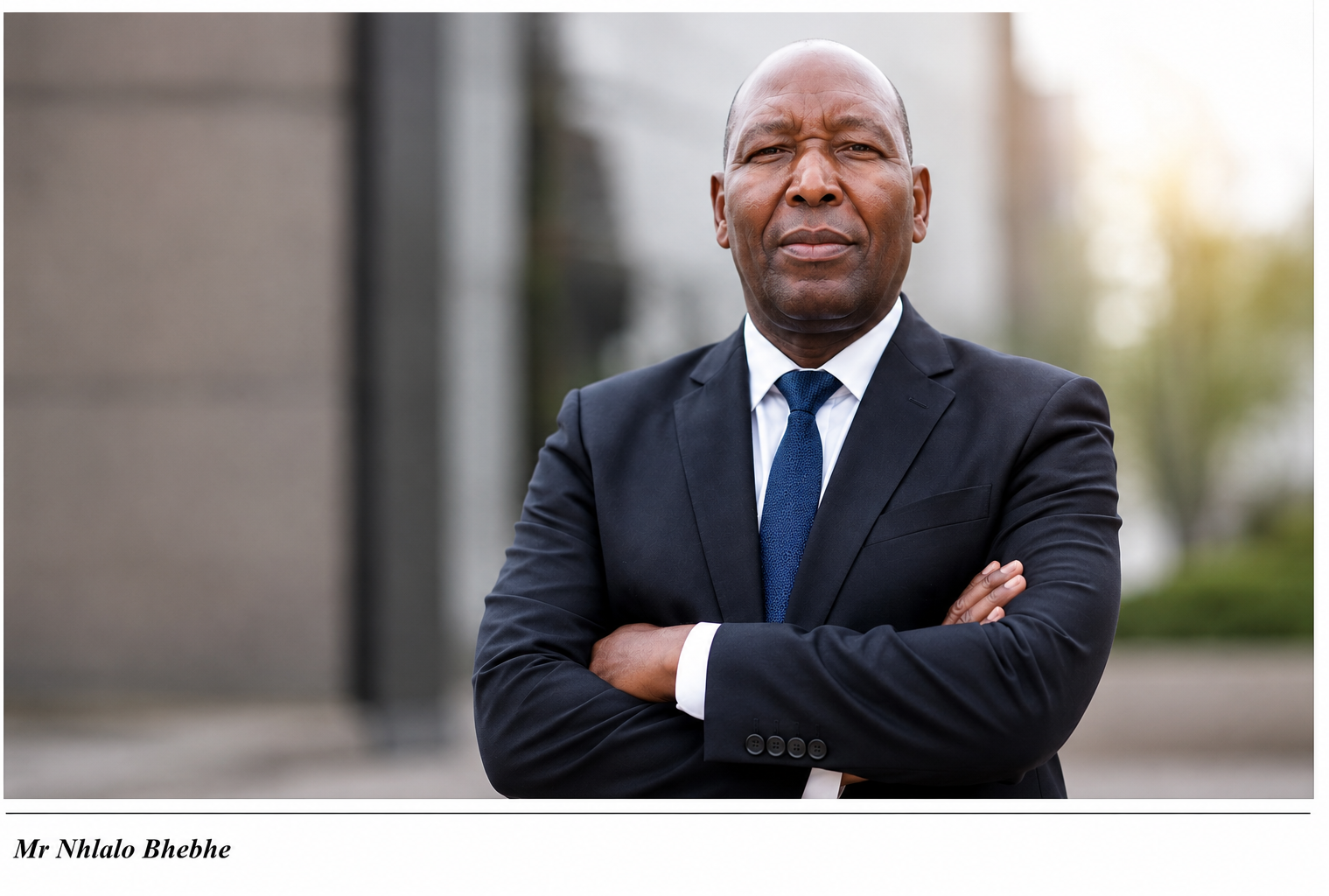
Speaking to a Daily Times Newspaper correspondent, CDS Marketing Executive Officer Mr Nhlalo Bhebhe said the college’s approach was aligned with the ever-evolving nature of education and the changing needs of learners in today’s society.
The college’s approach reflects a growing international understanding that education should follow the learner, rather than forcing every learner to fit into one rigid educational structure.
“At CDS, we believe that education should remain accessible to people regardless of their age, background or stage in life. Our responsibility is not simply to provide qualifications, but to create opportunities for people to acquire knowledge and skills that can improve their careers, businesses and communities,” said Mr Bhebhe.
Education should not have an expiry date
The world is increasingly questioning the idea that education belongs primarily to the young.
A 25-year-old who wants to acquire a new qualification, a 40-year-old seeking a career change, a working parent who needs flexible study arrangements, a school leaver looking for practical skills or an entrepreneur wanting to understand business management may all require education-but they do not necessarily need the same educational pathway.
This is where institutions such as CDS become particularly relevant.
The college’s approach reflects a growing international understanding that education should follow the learner, rather than forcing every learner to fit into one rigid educational structure.
That is an important distinction.
The traditional system often asks: Does this student fit the institution’s requirements?
The emerging system increasingly asks: How can the institution create an environment in which this person can learn?
That change has profound implications for Africa, where large numbers of young people and working adults need access to skills that can translate into employment, entrepreneurship and economic participation.
Closing the gap left by the traditional system
Under the leadership of its Director of Strategy and Programmes Mandlenkosi Sibanda, CDS has positioned itself within this changing educational landscape.
The institution’s development can be viewed as an attempt to close a gap that has existed between conventional education pathways and the aspirations of people who may not have been able-or may not have been ready—to follow those pathways at the traditional time.
This does not mean that conventional universities and colleges have become irrelevant.
Far from it.
Universities remain critical centres of research, professional formation and knowledge creation.
But the modern education ecosystem is becoming broader.
Diplomas, certificates, vocational qualifications, professional certifications, short courses, university-linked programmes, online learning and workplace training can coexist within the same educational landscape.
CDS’s model reflects this diversification.
Instead of viewing education as a single road, it presents education more like a network of roads—with different entry points and different destinations.
For a country such as Zimbabwe, where educational aspirations are high but economic circumstances can sometimes make traditional pathways difficult, such flexibility can be particularly significant.
The rise of the hybrid learner
The word hybrid has become increasingly important in education. It no longer refers simply to a student attending some classes physically and others online. It represents a broader philosophy.
A hybrid learner may study in a classroom, access learning materials through a digital platform, communicate with lecturers remotely, undertake practical assignments, attend professional workshops and acquire additional skills through short courses.
Education becomes something that can happen across different environments.
The workplace can become a classroom.
The smartphone can become a learning device.
The internet can become a library.
A professional mentor can become part of the learning ecosystem.
And artificial intelligence can become an additional learning assistant.
This is one of the major transformations of the 21st-century education system.
AI is changing the meaning of the classroom
Artificial intelligence is accelerating this transformation.
For centuries, education was constrained by physical realities. A student needed to be in a particular place at a particular time to access a teacher, a textbook, a laboratory or an institution.
Technology has progressively weakened those boundaries. AI is now taking that process further.
A learner can ask questions, receive explanations, explore concepts, practise writing, analyse information and obtain learning support through digital technologies from almost anywhere.
That does not mean teachers are becoming unnecessary.
Quite the opposite.
The role of the educator is evolving from being the sole source of information towards becoming a mentor, facilitator, critical-thinking guide and professional coach.
The greatest educational institutions of the future may therefore not necessarily be those that possess the biggest buildings.
They may be those that can create the most effective learning ecosystems.
CDS’s emphasis on physical and flexible learning pathways is therefore taking place at an important moment in global education.
A student may have the academic ability to study but lack the financial capacity to pay large amounts of tuition at once.
Flexible fee-payment arrangements therefore become an important part of educational access.
CDS has sought to make its programmes attractive to students through flexible and manageable payment arrangements, recognising a reality that educational institutions cannot ignore: many students live, work and study within difficult economic circumstances.
A flexible payment model can make the difference between someone abandoning an educational ambition and someone completing a qualification.
This is particularly important for working adults.
Someone supporting a family may not be able to leave employment for several years simply to pursue education.
A Zimbabwean institution with an international lesson
The CDS story is particularly interesting because it is taking place in Zimbabwe.
For many years, conversations about educational innovation have tended to focus on Europe, North America, Asia and other technologically advanced markets.
But Africa is also producing important educational experiments.
The continent has a large young population, growing demand for professional skills and an urgent need to connect education with economic opportunity.
Zimbabwe, with its long tradition of valuing education, presents an especially interesting environment.
The country’s educational culture has historically placed considerable emphasis on academic achievement.
But the demands of the modern economy require something more.
The new generation needs both knowledge and capability.
Breaking the age barrier
Perhaps one of the most powerful ideas emerging from this new model is that learning should not be restricted by age.
And when education becomes accessible to people who previously stood outside the traditional system, the productive capacity of an entire society can expand.
This connects strongly with the original development-oriented identity of CDS.
And in Zimbabwe, institutions such as the Centre for Development Studies College are becoming part of that conversation—demonstrating how a more flexible, skills-oriented and accessible approach to education can help open doors for people who might otherwise find the traditional system difficult to navigate.