
By Desmond Nleya
On 28 February 2022, FIFA and UEFA imposed a ban on Russia, prohibiting the country from participating in all international football competitions. The suspension, applied to both national and club teams, came in response to Russia’s invasion of Ukraine and was stated to remain “until further notice.” As a result, Russian teams were excluded from the 2022 World Cup and subsequent international tournaments.
Ever since, Russia has remained suspended. Yet, this decision raises pressing questions about consistency and fairness in international football governance. While Russia faces strict sanctions, FIFA has allowed other countries, notably Israel and the United States, to continue participating and even hosting major international competitions, despite being involved in military operations abroad.
Israel’s attacks on Gaza since 2023 and the ongoing U.S.-Israel military actions against Iran have drawn global attention, yet neither nation has faced the same sporting repercussions as Russia.
Adding to the apparent contradiction, the United States is currently hosting the FIFA World Cup, a tournament from which Russia remains banned. Critics argue that this demonstrates a double standard: while Russia is penalized for its military actions, other powerful nations engaging in comparable or arguably more severe conflicts continue to enjoy full participation in the global sporting arena.
This disparity prompts deeper questions: Who truly governs FIFA, and how impartial are its decisions? The organization, often viewed as a politically neutral sports body, has sometimes been accused of aligning with Western geopolitical interests.
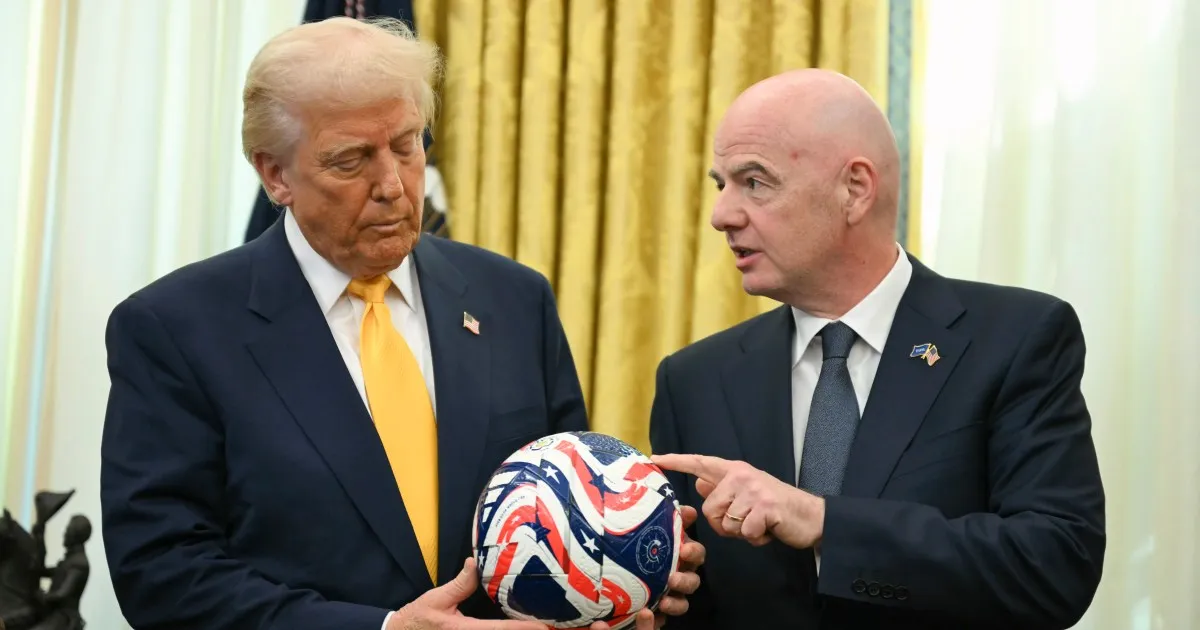
The awarding of a “peace” recognition to U.S. President Donald Trump further fuels concerns over perceived biases and selective moral judgment.
From a broader perspective, FIFA’s approach reflects the complex intersection of sports, politics, and international law. While sanctions against Russia were clear and immediate, enforcement appears inconsistent when dealing with other powerful nations. This inconsistency undermines the credibility of international sports governance and raises ethical questions about fairness, accountability, and the influence of political power on decisions that should ideally remain apolitical.
Ultimately, the Russia ban highlights a troubling reality: international sports are not immune to geopolitics. While the world champions sporting ideals of fairness and unity, political power dynamics often dictate whose actions are punished and whose are overlooked. As fans and observers, it is worth asking why a country like Russia is banned for military aggression while nations actively engaged in contemporary conflicts face no such restrictions. FIFA’s choices suggest that global football, like global politics, is as much about power as it is about principle.