
By Staff Reporter
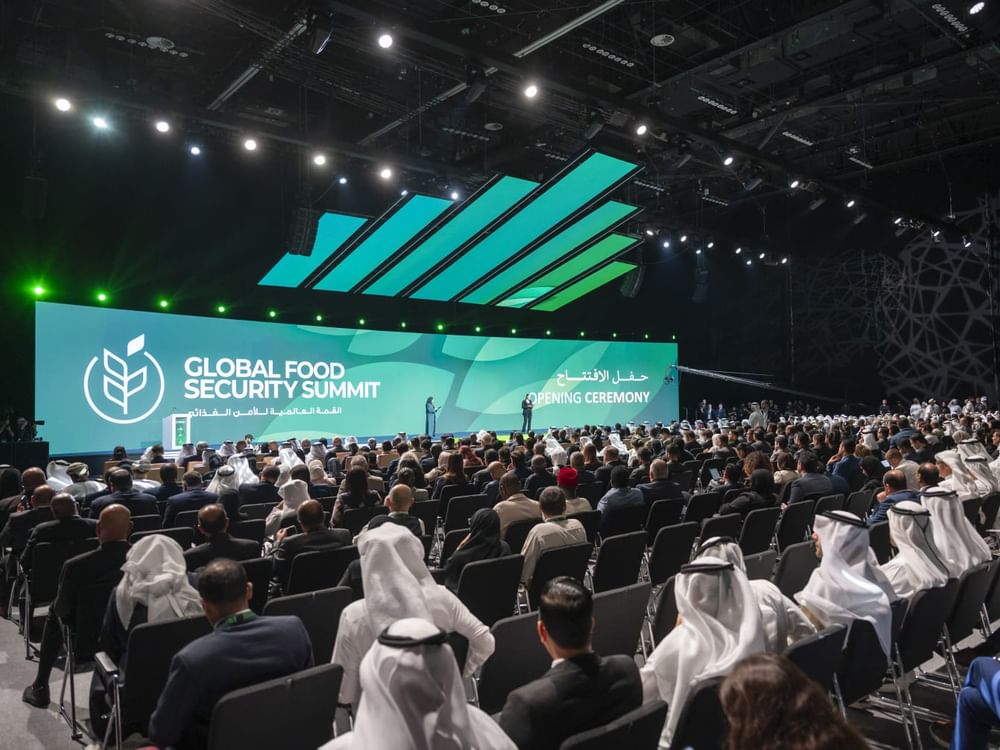
ABU DHABI, October 7, 2026 — The Tanzania-UAE Green Silk Road Initiative was launched on the opening day of the Global Food Security Summit 2026 in Abu Dhabi, with its promoters positioning the project as a new model for strengthening food security through agricultural investment, integrated value chains and cross-border cooperation.
The initiative is a strategic partnership involving Abu Dhabi National Investment and Development (ADID), the Tanzania Mercantile Exchange (TMX) and Tanzanian partners.
It seeks to establish a sustainable food security and economic corridor between Tanzania and the UAE, linking agricultural production with processing, storage, logistics, trade and access to regional and international markets.
ADID CEO Shamsa Al Fahim said the initiative was designed around the need to build resilient food systems rather than focusing only on food supply.
She said the Green Silk Road would connect agriculture, technology, investment and markets while creating opportunities for economic growth in both countries.
TMX CEO Godfrey Malekano said Tanzania had the agricultural potential to become an important food supplier to the Gulf region.
He said Tanzania was seeking investment partnerships rather than aid, highlighting opportunities in agricultural production, value-added processing and other areas of the food economy.
The two-day summit is being held under the theme “Global Collaboration for Food Security for All” and brings together governments, international organisations, financial institutions, investors and private-sector leaders to discuss ways of strengthening global food systems.
Discussions on the opening day focused on food system resilience, agricultural innovation, international cooperation and investment.
Dr AbdulHakim Elwaer, Assistant Director-General and Regional Representative for the Near East and North Africa at the Food and Agriculture Organization of the United Nations (FAO), called for greater investment in water-efficient agriculture, local food production, cold-chain infrastructure and technologies that reduce food loss and waste.
He also stressed the need to align agricultural trade, social protection and other policies to make nutritious food more accessible and affordable.
Speaking on food security through synergies, UAE Food and Beverage Manufacturers Group Chairman Saleh Abdullah Lootah said the strength of a food system should not be judged solely by how much food it produces, but also by its reliability, sustainability and cost-effectiveness.
A high-level panel on food equality examined how governments, development institutions, investors and private companies can work together to build more equitable food systems.
International Fund for Agricultural Development Special Envoy for the Middle East Dina Saleh said food security was a major test of the effectiveness of international cooperation.
International Finance Corporation Regional Industry Director for Manufacturing, Agribusiness and Services Wagner Albuquerque de Almeida said food insecurity was increasingly linked to affordability, access and distribution rather than food availability alone.
World Food Programme Regional Director for the Middle East, North Africa and Eastern Europe Samer Abdeljaber pointed to climate shocks, conflict and market disruptions as growing threats to food security.
The summit also examined the UAE’s camel milk industry, with discussions focusing on scientific research, product development, international standards, exports and the expansion of global markets.
A separate session on finance, investment and blended capital looked at ways of attracting more private investment into agricultural production.
IFAD Associate Vice President Finance and Chief Financial Officer Diane Menville said smallholder farmers currently receive only a small share of climate finance, making blended finance important in reducing investment risks and attracting private capital.
FAO Representative to the UAE and Officer-in-Charge of the FAO Subregional Office for the GCC States and Yemen Ahmad Mukhtar said food security should also be viewed as a business opportunity.
The summit further explored India’s experience in scaling agricultural innovation, including the use of artificial intelligence and precision technologies in farming, processing and logistics.
The 2026 Global Food Security Summit has attracted participants from more than 70 countries, including more than 20 ministers and senior government officials, over 80 speakers and about 350 registered CEOs.
The event is expected to continue discussions on investment, innovation and international partnerships aimed at building more resilient and sustainable food systems.