
By Staff Reporter
DUBAI — The United Arab Emirates has unveiled a locally developed space probe for its Emirates Mission to the Asteroid Belt, with the spacecraft reaching flight readiness in less than two years.
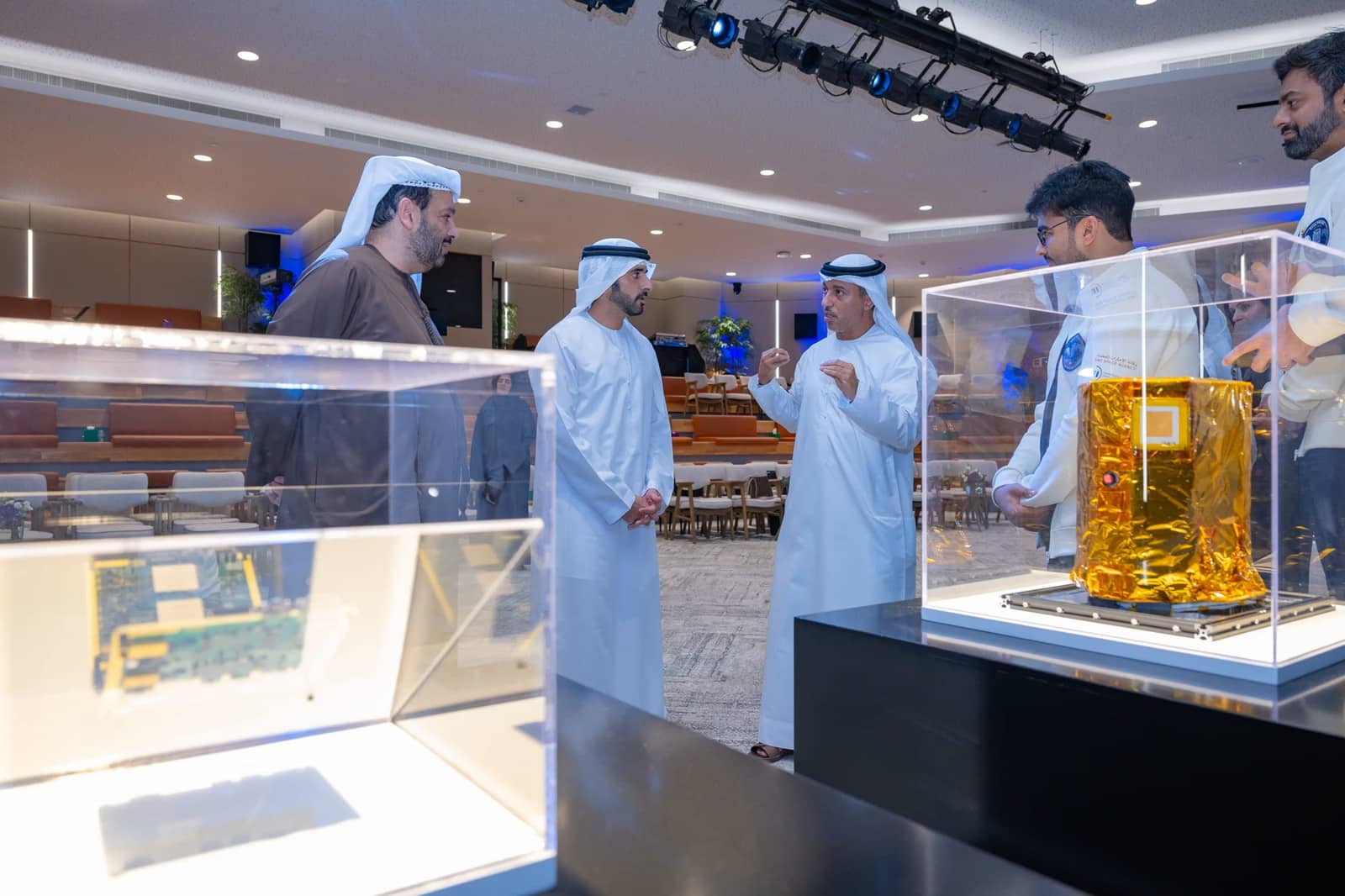
Sheikh Hamdan bin Mohammed bin Rashid Al Maktoum, Crown Prince of Dubai and Chairman of the Supreme Space Council, witnessed the unveiling of the probe, which was designed, assembled and tested in the UAE.
The probe will travel aboard the MBR Explorer on the UAE’s second interplanetary mission, covering about 5 billion kilometres as it passes seven asteroids before reaching its final target, 269 Justitia.
Once at Justitia, the probe is expected to separate from the MBR Explorer and autonomously descend to the asteroid’s surface.
Scientists believe Justitia may have originated in the outer Solar System before migrating into the main asteroid belt. Its study could provide new information about the distribution of water and organic materials during the formation of the planets.
The project began in January 2025 under an agreement between the UAE Space Agency and the Technology Innovation Institute.
More than 150 Emirati engineers and scientists have contributed to the mission, working alongside HEX20, Khalifa University and the National Space Science and Technology Center at the United Arab Emirates University.
The UAE Space Agency leads and funds the mission.
Sheikh Hamdan said the project demonstrated the growing capabilities of Emirati scientists and engineers and the strength of the country’s space research and manufacturing ecosystem.
The UAE’s space sector is now valued at more than AED44 billion, while the National Space Strategy 2031 seeks to double the returns of the space economy, increase its added value by 60% and position the country among the world’s top 10 space economies.
Faisal Al Bannai of the Advanced Technology Research Council said the probe demonstrated how advanced scientific research could be transformed into mission-ready engineering.
The spacecraft will be integrated with the MBR Explorer at the University of Colorado Boulder’s Laboratory for Atmospheric and Space Physics ahead of a planned launch from Japan in the first quarter of 2028.
The UAE is simultaneously advancing other major space projects, including the Rashid Rover 2 lunar mission, participation in NASA’s Artemis programme and Altair-Next Gen, a $1 billion initiative aimed at developing 50 AI-enabled satellites in Abu Dhabi.