
By Staff Reporter
Published: July 12, 2026
The 2026 FIFA World Cup has reached its final four, and the quarterfinals delivered a clear message: experience still matters on football’s biggest stage.
Former champions Argentina, England, France and Spain all advanced, setting up a semifinal lineup that evokes memories of the tournament’s traditional powerhouses. It is the first time since 1990 that four previous World Cup winners have occupied the last four places.
Each victory carried its own storyline, from tactical surprises and goalkeeping errors to moments of composure that separated seasoned contenders from ambitious challengers.
France punish Morocco’s bold gamble

France moved past Morocco with a 2-0 win in Boston, but the biggest talking point was Morocco coach Mohamed Ouahbi’s decision to start without a recognised striker.
The tactical experiment failed to unsettle the defending champions, who controlled large periods of the match despite Yassine Bounou saving a first-half penalty from Kylian Mbappe.
Mbappe eventually broke the deadlock with a curling effort just after the hour mark, and France never looked in danger after taking the lead.
Didier Deschamps admitted he was surprised by Morocco’s lineup, a sentiment shared by many observers. With injured forward Ismael Saibari unavailable, Morocco still had attacking options on the bench, but by the time substitutes arrived France had already seized control.
Spain’s young defender helps decide thriller


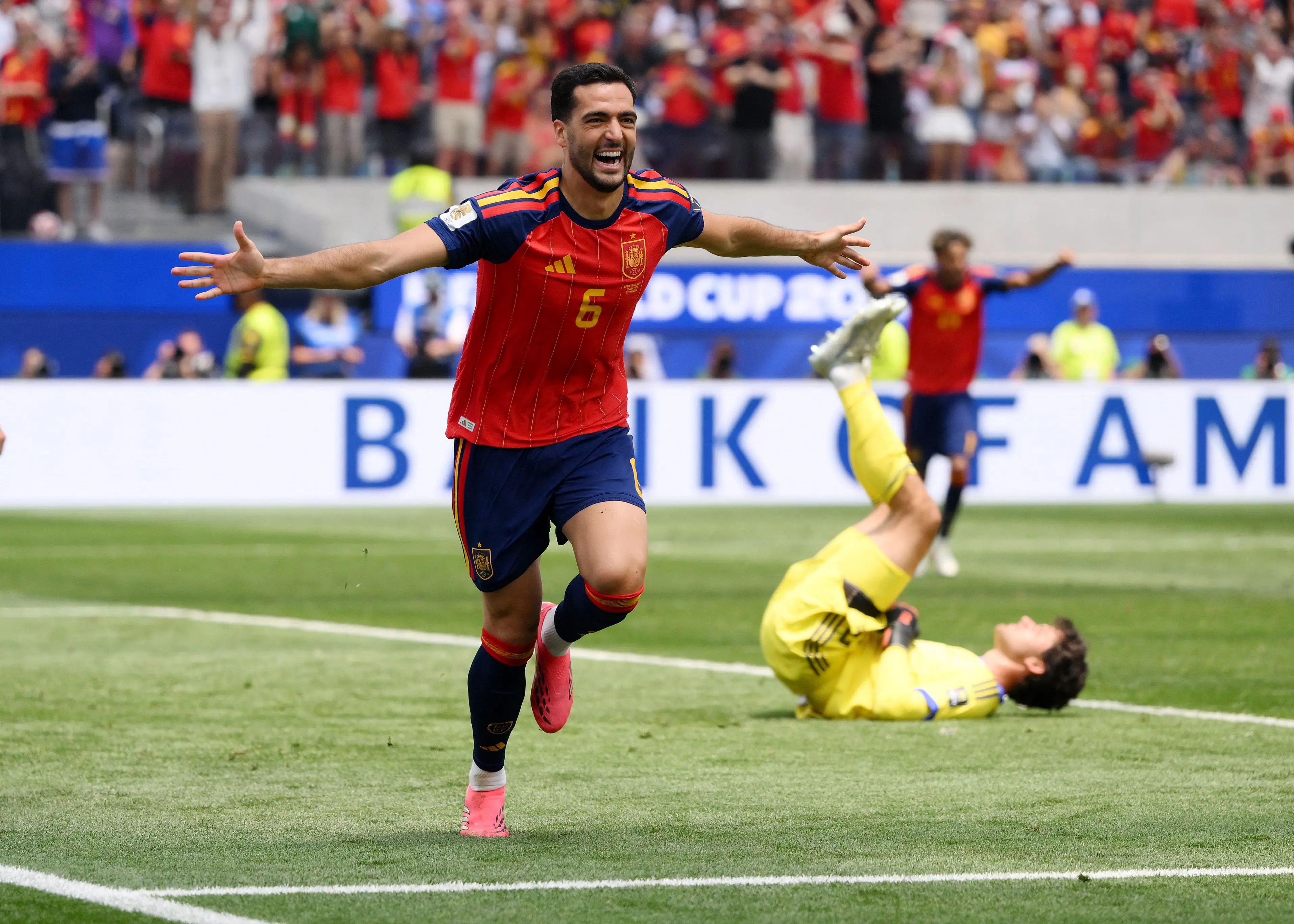
Spain edged Belgium 2-1 in Los Angeles thanks to a late winner from substitute Mikel Merino, but the move began with an unlikely source.
Nineteen-year-old defender Pau Cubarsi struck from nearly 30 metres, and Belgian reserve goalkeeper Senne Lammens spilled the effort into Merino’s path for the decisive goal in the 88th minute.
While Cubarsi is not expected to provide attacking inspiration, his growing role at the heart of Spain’s defence has become one of the tournament’s most intriguing developments.
Belgium also became the first team to score against Spain at this World Cup, yet La Roja continued to rely on their possession-heavy style to control the contest.
Another concern for Spain is the increased attention being paid to teenage sensation Lamine Yamal, who was effectively neutralised by Belgium’s defensive strategy.
England survive Norway scare


England left it late to defeat Norway 2-1 in Miami, with Jude Bellingham once again proving decisive.
Norway thought they had taken an early lead through a move involving Erling Haaland, but VAR ruled out the goal after a foul in the buildup. The Scandinavian side then missed opportunities to extend their advantage before halftime.
England equalised through a rapid counterattack sparked by Elliot Anderson, and Bellingham completed the turnaround deep into stoppage time when he converted after Jordan Pickford’s opposite number, Orjan Nyland, had made an initial save.
Norway coach Stale Solbakken later questioned whether a television camera cable had affected the flight of a goal kick that led to England’s equaliser, though FIFA maintained that no interference occurred.
England manager Thomas Tuchel described his side as fortunate, but the Three Lions’ resilience has become a recurring theme throughout the tournament.
Argentina benefit from costly Swiss mistake

Defending champions Argentina defeated Switzerland 3-1 in Kansas City after a controversial turning point involving Breel Embolo.
Already carrying a yellow card, Embolo was shown a second booking for simulation following a VAR review, leaving Switzerland with ten men at a crucial stage of the match.
Argentina had already taken the lead through Alexis Mac Allister, who headed home from a pinpoint Lionel Messi corner, and the numerical advantage allowed the South Americans to take firm control.
The match also highlighted Argentina’s growing attacking depth. While Messi remains the team’s creative heartbeat, the Albiceleste no longer rely solely on their captain to provide goals.
Semifinal stage set
The quarterfinals reinforced why these four nations remain among football’s elite. France showcased tactical adaptability, Spain demonstrated the emergence of another generation of talent, England relied on composure under pressure, and Argentina combined experience with efficiency.
As the tournament moves into the semifinals, the World Cup now guarantees a final between two traditional giants. After weeks of surprises, the competition has arrived at a familiar destination — with football’s biggest names once again battling for the sport’s ultimate prize.