
By Shelton Muchena, Investigative Journalist
There are moments in history when the world seems to pause.
Not because peace has arrived, but because humanity senses that events are moving toward a dangerous crossroads. These moments rarely begin with dramatic announcements. They begin quietly with a decision taken in a distant capital, a military order signed behind closed doors, aircraft leaving runways in the darkness before dawn.
By the time the world understands what has happened, the consequences are already spreading.
The American strike against Iran has become one of those moments. In the hours that followed, governments around the world began asking the same uneasy question: was this a necessary act of strength, or the first move in a chain of events that could reshape global stability?
For supporters of the decision, the action represented resolve. They argue that the United States acted to prevent a larger threat from emerging and to demonstrate that certain boundaries in international security cannot be ignored. In their view, decisive force can sometimes prevent greater wars by making the cost of escalation unmistakably clear.
But beyond Washington and its allies, the reaction has been far more complicated.
Across much of the world, the strike has stirred deeper anxieties about power, responsibility and the fragile structure of international order. Critics argue that when powerful nations act unilaterally, they risk normalising a dangerous precedent one in which military force becomes the preferred language of global politics.
For many observers, the concern is not simply about one strike or one country. It is about what happens next.
The modern world is no longer shaped by a single centre of power. The balance that once defined global politics has shifted. China has emerged as an economic giant with expanding geopolitical influence. Russia continues to assert itself through military power and strategic alliances. Nations such as Iran and North Korea have built their own forms of deterrence, relying on asymmetric tactics and technological advances to challenge stronger adversaries.
In this environment, even limited conflicts carry global consequences.
Each major power now watches the actions of the others with intense caution. A decision made in Washington is analysed in Beijing. A reaction in Tehran is examined in Moscow. Every move becomes part of a larger calculation, a strategic puzzle in which no nation wants to appear weak, yet none can afford the catastrophic risks of direct confrontation.
It is this delicate balance that keeps the world from sliding into a wider war.
For now, restraint appears to guide the behaviour of the major powers. Even those who strongly criticise American actions understand the enormous dangers of escalation. Modern warfare between nuclear-armed states would not resemble the conflicts of the past. It would threaten the foundations of global civilisation itself.
Yet restraint does not eliminate tension. It merely contains it.
Behind diplomatic statements and cautious responses lies a deeper struggle over the future shape of global power. The United States remains the world’s most formidable military force, with a defence network that stretches across continents. But power today is measured in more than military strength. Economic influence, technological leadership and political alliances now shape the balance of the international system.
China’s rapid rise has already altered that balance, creating a world where influence is increasingly shared rather than concentrated. Russia’s assertive foreign policy continues to challenge Western security structures. Smaller states have also learned how to exert influence in unconventional ways, using cyber warfare, economic leverage and regional alliances to reshape geopolitical dynamics.
The result is a world that feels increasingly unpredictable.
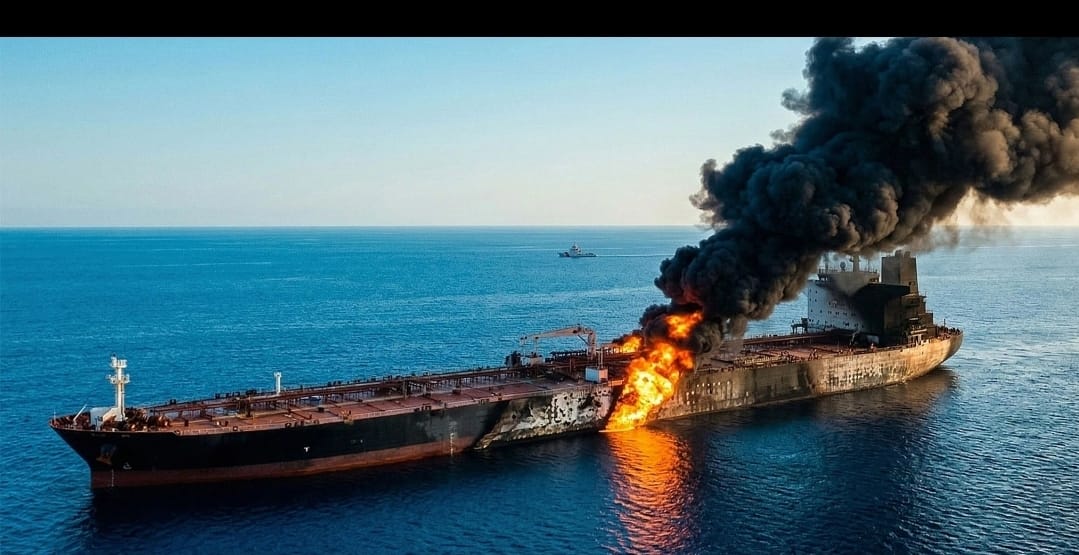
Even when wars remain limited to specific regions, their consequences rarely stay contained. Global trade networks react instantly to instability. Shipping companies reconsider routes that pass through contested waters. Energy markets fluctuate as traders anticipate possible disruptions.
Within weeks, the economic ripple effects begin to appear far from the original conflict. Transport costs rise. Businesses face uncertainty. Families see subtle but unmistakable changes in the price of fuel, food and everyday goods.
War in the twenty-first century does not remain confined to battlefields. Its consequences travel quietly through the arteries of the global economy.
Yet beyond strategy and economics lies the most human dimension of all. In cities across the Middle East, families follow news of military developments with quiet fear. In American towns, soldiers prepare for deployments that could take them far from home. Across Europe, Asia and Africa, millions watch unfolding events with a sense that the world has entered another uncertain chapter.
The language of geopolitics often reduces conflict to calculations of power and security. But behind every decision are human lives people who must live with the consequences long after the headlines fade.
And so the world waits.
Will diplomacy find a path that lowers tensions before they harden into confrontation? Will rival powers step back from the brink, recognising the enormous risks that lie beyond escalation? Or will future decisions taken in the coming weeks and months gradually pull nations deeper into a cycle of retaliation and suspicion?
History offers one lesson above all others: wars rarely begin with a single moment. They begin with choices.
Today, those choices are still being made.