
By Desmond Nleya
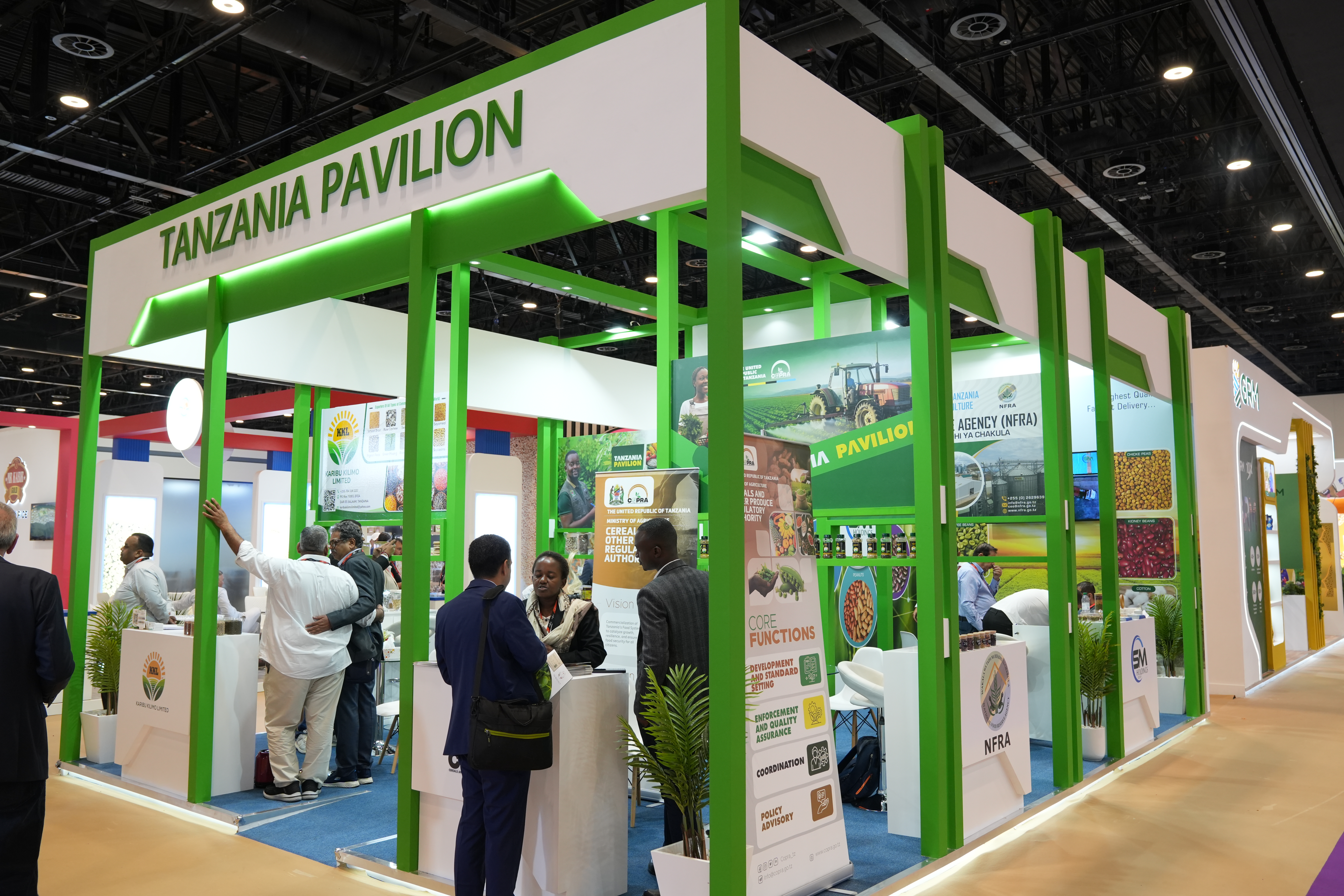
The Tanzania Pavilion has emerged as one of the standout attractions at this year’s Gulfood World Summit, drawing overwhelming interest from global investors, buyers, traders and industry stakeholders.
As the summit enters its fourth day and heads toward its conclusion tomorrow, the Tanzanian stand continues to record heavy foot traffic, positioning the country as a rising force in global agri-food trade.
Widely regarded as one of the most visited and frequented pavilions at the expo, the Tanzania Pavilion brings together key national institutions and industry bodies showcasing the country’s agricultural strength and export readiness. Exhibitors include the National Food Reserve Agency (NFRA), Cereals and Other Produce Regulatory Authority (COPRA) under the Ministry of Agriculture and the Tanzania Federation of Cooperatives (TFC), among others.
The pavilion highlights a diverse range of Tanzanian agricultural products, with strong emphasis on oil seeds, pulses, cereals, and cattle feed. These products have attracted sustained interest from international markets seeking reliable, scalable and high-quality food supply sources, particularly amid global concerns around food security and supply chain resilience.
The strong performance of the Tanzania Pavilion at Gulfood carries significant economic and strategic value for the country. By engaging directly with international investors and buyers, Tanzania is opening new export channels, strengthening trade partnerships, and enhancing foreign direct investment prospects within its agricultural sector.
Such exposure supports value-chain development, promotes agro-processing opportunities, and contributes to job creation across farming, logistics, and manufacturing. Increased demand for Tanzanian produce also strengthens rural economies and reinforces the role of cooperatives in inclusive economic growth.
Moreover, participation at a global platform like Gulfood elevates Tanzania’s profile as a dependable food producer and trade partner, reinforcing government efforts to modernise agriculture, improve productivity, and expand access to international markets.