
By Desmond Nleya
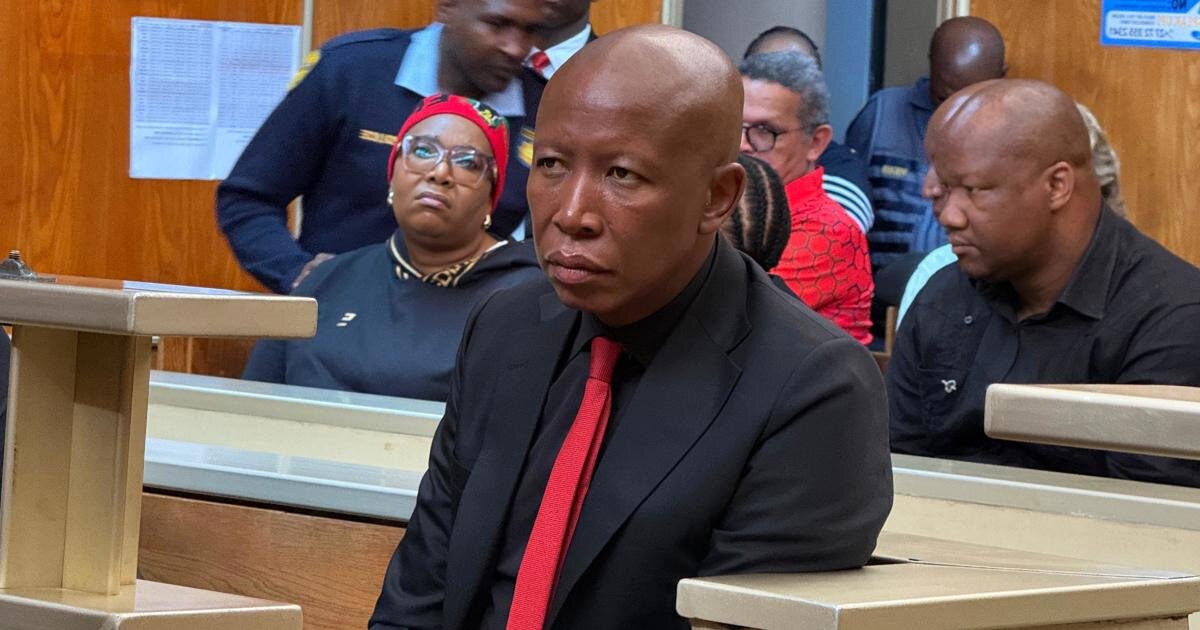
South Africa’s main opposition leader Julius Malema will today be at the East London Magistrate’s Court for pre-sentencing after being convicted last year of unlawful possession and discharge of a firearm in a public place.,
The incident took place in 2018.
Today the court must decide not just what Malema did, but what it means for him, for the EFF, and for South Africa’s fragile relationship with accountability and power.
In South African law, these are serious crimes, carrying a potential sentence of up to 15 years’ imprisonment. That maximum looms large in public discourse, but sentencing is never arithmetic. It is judgment tempered, contextual, and often political in its consequences, even when courts insist otherwise.
The case stems from an incident where Malema discharged a firearm at a public event,an act that prosecutors argued endangered lives and violated firearm control laws designed precisely to prevent such displays of recklessness.
The state’s position has always been simple: no one, regardless of political status, is above the law.
Public safety, they argue, must trump symbolism, bravado, or political theatre.
The conviction itself already sent a message. Today’s question is whether that message ends with a warning or escalates into punishment that reshapes South Africa’s political landscape.
What the Court Is Weighing Today
This hearing is not a rubber stamp. The magistrate must weigh:
- The seriousness of the offence: Discharging a firearm in public is inherently dangerous, particularly in a country battling gun violence.
- Personal circumstances: Malema’s age, role as a public figure, and political responsibilities.
- Remorse: Courts take genuine remorse seriously; defiance, less so.
- Mitigating factors: Including whether imprisonment would serve justice or merely spectacle.
Legally, direct imprisonment is a real possibility. But so too are alternatives: a suspended sentence, a shorter custodial term under 12 months, or a fine. South African courts have often leaned toward restraint where imprisonment may cause disproportionate collateral damage—especially in politically charged cases.
Malema’s Defence: Politics, Not Criminality
Malema’s defence has consistently framed the incident as lacking criminal intent and argued that imprisonment would be excessive. Implicitly, the defence also gestures toward the broader context: Malema is not a private citizen. He is the leader of a major opposition party, and any harsh sentence risks appearing punitive beyond the facts of the case.
This is a delicate argument. Courts bristle at suggestions that political status should soften justice, yet they cannot ignore the constitutional consequences attached to sentencing decisions.
The Political Guillotine: What Prison Would Mean
If Malema is sentenced to more than 12 months without the option of a fine, the consequences are immediate and severe:
- He would lose his seat in Parliament.
- He would be disqualified from holding public office for five years after completing his sentence.
Such an outcome would not merely punish Malema; it would decapitate the EFF’s leadership and reshape opposition politics overnight. Supporters would likely frame it as political persecution. Critics would hail it as overdue accountability. Either way, the ruling would echo far beyond the courtroom.
Public Opinion: Split Down the Middle
Public sentiment mirrors South Africa’s deep political divides. To Malema’s supporters, this case is proof that outspoken radicals are targeted more aggressively than others who flirt with the law. To his critics, it is a long-delayed reckoning—evidence that populism does not grant immunity.
What unites both camps is anxiety: everyone understands that today’s decision will set a precedent, not just for Malema, but for how South Africa treats powerful figures who test the limits of legality.
Likely Outcome: Punishment Without Political Detonation
Based on legal commentary and judicial patterns, the most likely outcome is a suspended or lighter sentence below 12 months. This would affirm the seriousness of the offence without triggering constitutional fallout. It allows the court to punish the act, not destabilise the polity.
That said, direct imprisonment remains on the table. If the magistrate prioritises deterrence and public safety over political consequence, Malema could indeed face jail time. A lengthy, multi-year sentence, while legally permitted, remains the least likely scenario.
Today, the magistrate does more than sentence a man. The court balances justice against stability, principle against perception. Julius Malema’s fate hangs not just on what the law allows, but on what the moment demands.
Either way, the ruling will be remembered as a defining chapter in the uneasy dance between power and accountability.