
By Staff Reporter
DUBAI: A flydubai captain has revealed how he was repeatedly struck from behind, left with severely blurred vision and forced to make one final desperate attempt to regain control of his aircraft during a terrifying mid-air cockpit attack.
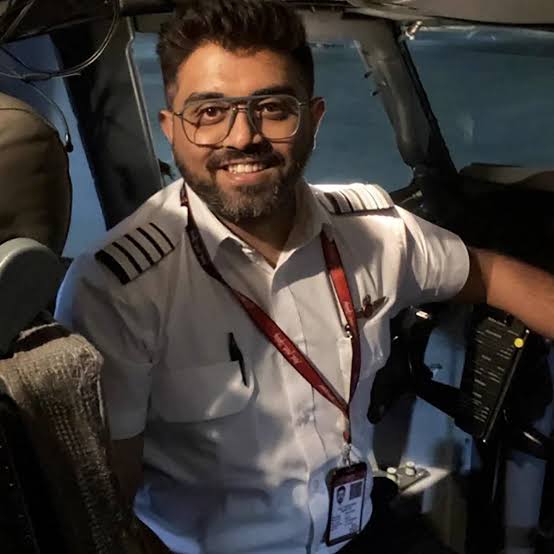
Captain Smit Machchhar was flying flydubai flight FZ1073 from Dubai to Tel Aviv on Wednesday when the attack began while the Boeing 737-8 was cruising at about 34,000 feet.
Machchhar said he initially had no idea he was being attacked.
His co-pilot had been praying behind him, something Machchhar said was not unusual. Out of respect, he kept his attention focused towards the front of the cockpit.
Minutes later, something struck the back of his head.
His first thought was that the aircraft had suffered catastrophic damage.
“My first thought was that there was catastrophic damage to the aircraft, that something is not right,” Machchhar recalled.
Then another blow came, followed by another.
That was when he realised the danger was coming from inside the cockpit.
“It’s not the aircraft, it’s the other guy who is in the cockpit with me,” he said.
Machchhar attempted to fight back, but the blows had seriously affected his vision.
“I did try and stop him, but because of his initial blows, my vision was almost like nothing, and I was completely blurred out,” he said.
The situation quickly became critical as the aircraft began descending sharply.
“At that point, the next feeling I had was that the aircraft was sharply going down,” Machchhar recalled.
Flight FZ1073 transmitted emergency signals and descended more than 17,000 feet during the incident.
Despite his injuries, Machchhar managed at one point to open the cockpit door, although it was subsequently closed again.
He eventually found himself on the cockpit floor, surrounded by the sound of the aircraft and screaming passengers.
“I felt the aircraft and the whooshing sound and people screaming,” he said.
Bloodied and struggling to see, the captain said he knew he had one final opportunity to act.
“And as I was telling the Ambassador here, I had that one last fight left in me,” he said.
Machchhar said survival instinct and the responsibility for those aboard the aircraft drove him forward.
“Call it personal or call it for people, I did it because if I didn’t do it, I was going to die.”
He gathered what remained of his strength and pushed towards the cockpit door.
“I pushed against everything … I gave everything that I had and went for the door and opened the door.”
Crew members and others outside the cockpit were ready to intervene.
“Thankfully, people were waiting to pounce back … took over control and the rest is what you know,” Machchhar said.
The aircraft, carrying 174 people, including 27 children, was eventually diverted to Prince Sultan Bin Abdel Aziz Airport in Tabuk, Saudi Arabia.
Images and videos that emerged after the emergency showed Machchhar covered in blood, wearing an oxygen mask and lying on his back in the aircraft galley.
His account has provided one of the clearest descriptions yet of the moments inside the cockpit and the desperate struggle that unfolded as the aircraft descended thousands of feet.
For Machchhar, what began as a routine flight quickly became a fight for survival — and a battle to prevent a disaster involving everyone on board.