
By Staff Reporter
July 23, 2026 — The conflict between the United States and Iran has entered its twelfth consecutive night, with renewed military strikes, attacks on commercial shipping, and growing concerns over regional stability.
According to reports, United States forces carried out fresh airstrikes on Iran, killing at least two people and injuring 11 others during an attack on the Shalamcheh border crossing with Iraq.
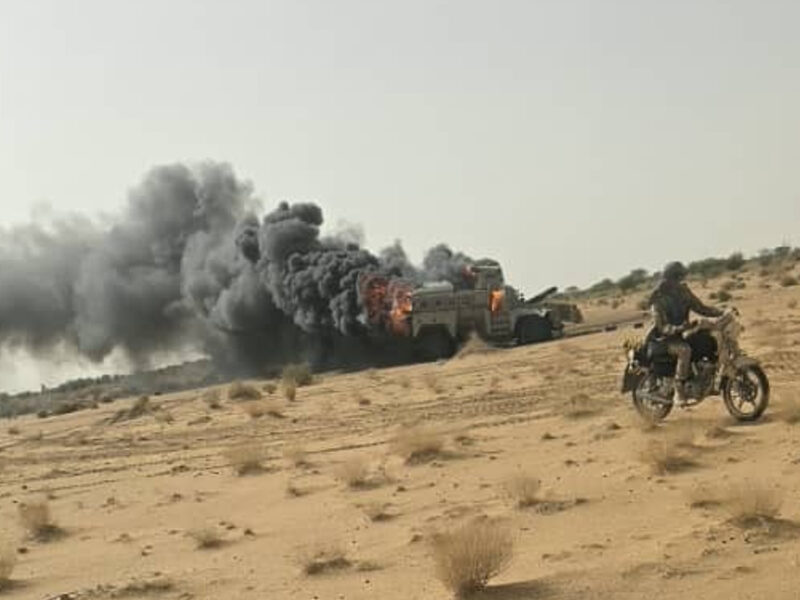
Meanwhile, Iran’s Islamic Revolutionary Guard Corps (IRGC) reported that a tanker caught fire in the Strait of Hormuz, further raising fears over the security of one of the world’s most important energy corridors.
In a separate development, Yemen’s Houthi movement claimed responsibility for missile and drone attacks targeting two Saudi oil tankers in the Red Sea, signalling an expansion of the conflict beyond Iranian territory.
Iranian Foreign Minister Abbas Araghchi reaffirmed Tehran’s stance, describing the country’s defence doctrine as “an eye for an eye.” His remarks came after US President Donald Trump warned that American forces would strike Iranian infrastructure—including bridges and power plants—for every attack on shipping in the Strait of Hormuz.
Amid the escalating conflict, the United States and Saudi Arabia announced a landmark nuclear cooperation agreement that could allow the Kingdom to develop civilian uranium enrichment capabilities. The agreement marks a significant shift in regional strategic cooperation and is expected to have far-reaching geopolitical implications.
The continued exchange of military action and threats has heightened concerns that the conflict could spread further across the Middle East, with critical shipping routes and energy infrastructure increasingly becoming targets.