
By Staff Reporter
The 2026 World Cup has delivered a semifinal lineup featuring football’s biggest stars, but can France, Spain, England and Argentina produce a finale worthy of their reputations?
A semifinal lineup packed with giants
As the FIFA World Cup 2026 reaches its decisive stage, football fans are being treated to a semifinal lineup that reads like a dream: France, Spain, England and Argentina.
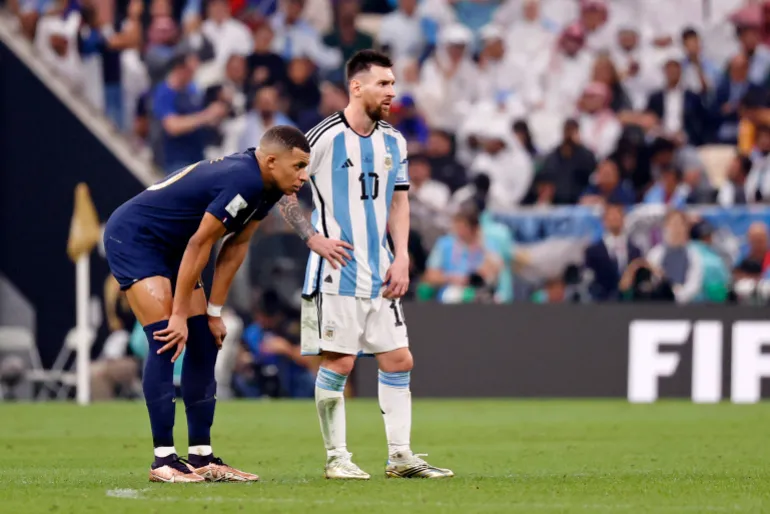
The tournament has revived memories of the 2022 final in Qatar, where Lionel Messi inspired Argentina to victory over France. Four years later, both nations are back in the last four, but this time they face opponents widely regarded as genuine title contenders.
What makes this stage remarkable is that, for the first time since FIFA rankings were introduced in 1992, the world’s top four ranked teams have all reached the semifinals.
The stars leading the charge
#1 France
France
Ranked number one in the world, France are powered by Kylian Mbappe, one of the game’s most feared forwards. They also possess Ballon d’Or holder Ousmane Dembele, giving them arguably the tournament’s most explosive attack.
#2 Argentina
Argentina
Messi continues to defy age and expectation. After helping Argentina become only the third nation to successfully defend a World Cup title, the 39-year-old may strengthen his claim as the greatest player in football history.
#3 Spain
Spain
Spain have relied on a disciplined defence, but much of the spotlight is on teenage sensation Lamine Yamal. After returning from the calf injury that disrupted the end of his club season, Yamal has the opportunity to repeat the brilliance he showed during Spain’s Euro 2024 triumph.
#4 England
England
England may be the lowest-ranked of the four, but many bookmakers still place them among the favourites. Captain Harry Kane remains a proven goalscorer, while Jude Bellingham is increasingly viewed as a generational talent capable of carrying England to glory.
How does 2026 compare with past World Cups?
2018 – France, Croatia, Belgium, England
Strong
France won their second title, while Croatia reached a historic first final. Belgium possessed immense talent but never fully delivered on its promise.
2014 – Germany, Argentina, Brazil, Netherlands
Historic
Germany famously demolished Brazil 7-1 in one of football’s greatest shocks. Yet many of the tournament’s later matches were cautious rather than spectacular.
2006 – Italy, France, Germany, Portugal
Memorable
Best remembered for Zinedine Zidane’s infamous head-butt in the final. The semifinal lineup featured famous names, but several teams were already past their peak.
1990 – West Germany, Argentina, Italy, England
Legendary names
A tournament rich in iconic players such as Lothar Matthaus, Jurgen Klinsmann and Diego Maradona, though the football itself was often defensive and attritional.
1986 – Argentina, West Germany, France, Belgium
Maradona’s stage
Maradona’s brilliance transformed the tournament, highlighted by his unforgettable performance against England.
1974 – West Germany, Netherlands, Brazil, Poland
Revolutionary
The world was introduced to Johan Cruyff and the Dutch concept of “Total Football”.
1970 – Brazil, Italy, West Germany, Uruguay
Benchmark
Often regarded as the gold standard. Pele and Brazil’s extraordinary attacking side changed how international football was played.
What makes 2026 different?
Unlike some previous tournaments that relied heavily on one iconic figure or one dominant team, the 2026 semifinals feature elite talent spread across all four nations.
Mbappe, Messi, Yamal, Kane and Bellingham each have realistic claims to be the defining player of the tournament. Add world-class supporting casts, modern tactical sophistication and the increased competitiveness of international football, and the argument for 2026 becomes compelling.
Even defending champions Argentina are viewed by some as outsiders, a measure of how strong the remaining field is.
The verdict
Too close to call
On paper, the 2026 World Cup semifinals may be the strongest collection of teams and individual stars ever assembled at this stage of the competition.
Whether they surpass the magic of Pele’s Brazil in 1970, Cruyff’s Netherlands in 1974 or Maradona’s Argentina in 1986 will ultimately depend on the football that unfolds over the next few days.
If the performances match the talent on display, the World Cup could be about to produce one of the greatest finales the sport has ever seen.