
What UAE parents need to know before the new school year begins
As the August 31 school reopening date approaches, families across the UAE are preparing for the 2026–27 academic year. Parents are checking school calendars, completing health requirements, buying uniforms and supplies, and looking for ways to manage rising back-to-school expenses.
School term dates
Most UAE public and private schools following the unified calendar will reopen on August 31, 2026.
Key dates include:
- School begins: August 31, 2026
- First-term break: October 12–18, 2026
- Classes resume: October 19, 2026
- Winter break: December 14, 2026 – January 3, 2027
- Classes resume: January 4, 2027
- Spring break: April 5–11, 2027
- Classes resume: April 12, 2027
- Academic year ends: July 2, 2027
Schools in Sharjah follow a separate regulatory framework, while some schools following Indian, Pakistani and Bangladeshi curricula operate on different academic calendars. Parents are therefore advised to confirm dates directly with their children’s schools.
Check children’s vaccinations
Parents are being encouraged to review their children’s vaccination records before classes resume. Doctors say particular attention should be given to MMR, DTaP/Tdap, meningococcal and chickenpox vaccinations.
Families who travelled internationally during the summer should also check whether any vaccinations or health precautions were missed.
The seasonal flu vaccine is expected to become available in the first week of September.
Dubai strengthens school transport safety
Dubai’s Roads and Transport Authority has introduced a 30-day inspection campaign targeting school buses ahead of the new academic year.
The checks will focus on vehicle safety, driver and attendant permits and compliance with operating requirements.
Parents will also have access to services including Careem School Rides, Uber Teens and BOLT School. Students using public transport can receive a 50 per cent discount on Metro, Tram and bus fares with a student nol Card.
Keep schoolbags light
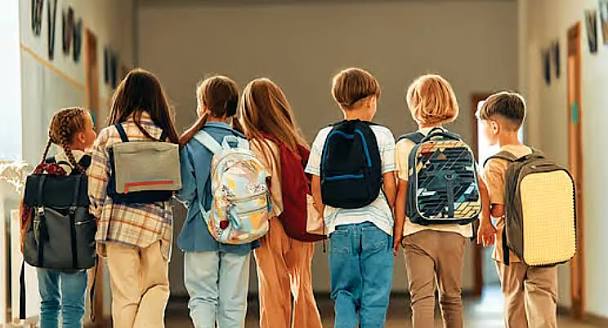
Experts recommend that a child’s schoolbag should generally weigh no more than 10 per cent of their body weight. For a child weighing 30kg, that means keeping the bag at around 3kg or less.
Parents should choose a lightweight bag that fits properly, has two adjustable shoulder straps and distributes weight evenly. Heavy items should be placed close to the child’s back.
Trolley bags can help with heavier loads over smooth surfaces but may become difficult to handle on stairs and uneven ground.
Check school shoes carefully
Comfort should be the priority when choosing school shoes. Children should have enough room for their toes to move, while the heel should remain secure.
Parents should allow children to walk around in both shoes before buying them and check for signs of rubbing, blisters, redness or discomfort.
How parents can control back-to-school spending
Back-to-school costs can quickly add up, with uniforms, supplies and activities reportedly costing families more than last year.
Parents can reduce expenses by buying items during sales, repairing and reusing schoolbags and lunch boxes, and checking what children already have before purchasing new supplies.
Creating a home box for unused stationery and involving children in simple budgeting decisions can also help families avoid unnecessary purchases.
Prepare children emotionally
Returning to school is not only a practical transition but also an emotional one.
Child specialists advise parents against changing sleep schedules, screen time, meals and other routines all at once. Instead, families should make changes gradually, ideally beginning one or two weeks before school starts.
Parents should also listen when children express worries about returning to school. Rather than immediately saying everything will be fine, asking what feels difficult can encourage children to talk openly.
The goal, experts say, is not to create a perfect return to school but to help children feel supported, prepared and confident as they begin the new academic year.