
By Desmond Nleya
NEW YORK — Kenyan President William Ruto has renewed calls for sweeping reform of the United Nations Security Council, demanding permanent African representation on the powerful body responsible for international peace and security.
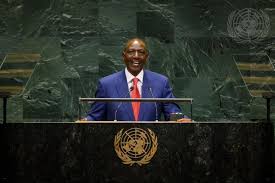
Addressing the UN General Assembly on Wednesday, Ruto said Africa’s absence from the council’s permanent membership was increasingly difficult to justify, given the continent’s size and role in global affairs.
“Africa has 54 member states, more than a quarter of this assembly, yet no permanent voice in the body entrusted with the primary responsibility for international peace and security,” Ruto said.
He accused the international system of continuing to exclude Africa from decisions that directly affect the continent.
“We are frequently the subject of its decisions, permanently discussed, yet permanently excluded,” he said.
Ruto argued that the Security Council no longer reflects the geopolitical realities of the modern world.
He said the council was established at a time when most African countries were still under colonial rule and had little or no representation in international institutions.
“The world has since transformed. The Council, the Security Council, has not,” Ruto said.
The push for Security Council reform has gained renewed momentum among African countries, with the African Union seeking a greater role for the continent within the UN system.
South Africa has also placed Security Council reform among its priorities. Its Permanent Representative to the UN in New York, Ambassador Mxolisi Sizo Nkosi, said the issue remained an important part of South Africa’s agenda.
Ruto’s intervention came a day after outgoing UN Secretary-General Antonio Guterres also backed permanent African representation on the Security Council.
Guterres told the General Assembly that a 21st-century Security Council without permanent African representation was “unjust and indefensible.”
The Security Council currently has 15 members, including five permanent members — China, France, Russia, the United Kingdom and the United States — which hold veto power.
African countries have long argued that the current structure does not adequately reflect the continent’s contribution to the UN or its exposure to international peace and security challenges.
The debate over reform remains politically complex, however, as any changes to the council’s membership structure would require agreement among UN member states and amendments to the UN Charter.