
By Desmond Nleya
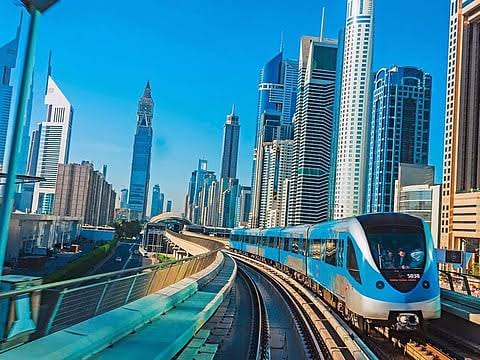
DUBAI — Dubai Metro has marked 17 years since its launch, cementing its position as one of the emirate’s most important transport systems and a major symbol of Dubai’s rapid urban development.
The Metro began operations at 9:09pm on September 9, 2009, in a launch that transformed public transportation in a city long associated with private cars.
More than 110,000 passengers used the system within its first 48 hours, demonstrating the immediate demand for a reliable mass-transit network.
Seventeen years later, the Metro has become the backbone of Dubai’s public transport system. In 2025 alone, the Red and Green lines carried 294.7 million passengers, representing a seven per cent increase from the previous year.
The network has also expanded significantly since its opening. Today, the Dubai Metro stretches for nearly 90 kilometres and has 55 stations across the two operating lines.
Sheikh Mohammed took the first journey
The Metro’s inaugural passenger was Sheikh Mohammed bin Rashid Al Maktoum, Vice-President and Prime Minister of the UAE and Ruler of Dubai.
He purchased the first ticket using his personalised blue nol card before boarding at Mall of the Emirates station. His inaugural journey lasted about an hour and ended at Etisalat station in Al Qusais, now known as Etisalat by e& Metro Station.
The system quickly gained international recognition for its scale and technology. From its launch until 2016, Dubai Metro held the Guinness World Record for the longest driverless metro network, covering 75 kilometres.
Dubai’s rail network is now set for another major expansion with the planned Blue Line.
Blue Line to expand the network
The Blue Line project will add 30 kilometres to the Metro network and introduce 14 new stations, taking the total number of stations to 78.
The expansion will connect major areas including Academic City, Dubai Silicon Oasis and Dubai Festival City. It will also feature a 1.3-kilometre bridge across Dubai Creek and three major interchange stations.
Among the project’s notable features will be Emaar Properties Station, which is planned to become the world’s tallest metro station at 74 metres.
Dubai has also outlined plans for a proposed Gold Line, a 42-kilometre fully underground route with 18 stations. The AED34 billion project is scheduled to begin operations on September 9, 2032.
The proposed route would connect Al Ghubaiba in Bur Dubai with Jumeirah Golf Estates while providing Metro access to areas including City Walk, Meydan and Global Village.
Billions of passengers
Since its launch, Dubai Metro has carried more than 2.4 billion passengers across millions of journeys.
The system has maintained a reported punctuality rate of 99.7 per cent, highlighting the reliability of the driverless network.
Passenger numbers have continued to rise. During the first six months of 2026, the Metro carried 136.5 million passengers, accounting for almost four in every 10 public transport journeys in Dubai during the period.
Connecting modern Dubai with its heritage
The Metro has also been designed to reflect the emirate’s cultural identity.
Stations incorporate design elements inspired by four natural elements — air, earth, fire and water — while architectural features such as shell-shaped roofs pay tribute to Dubai’s pearl-diving heritage.
The Green Line, which opened in 2011, provides a direct link through some of Old Dubai’s historic districts, including areas around the Gold Souq, Spice Souq and Dubai Museum.
The Route 2020 extension further expanded the network by adding 15 kilometres to the Red Line and seven stations serving areas including Discovery Gardens, Al Furjan, Dubai Investment Park and Expo 2020.
Accessibility and technology
Dubai Metro has been designed to accommodate people of determination, with stations equipped with elevators and tactile guidance paths. Trains also have dedicated wheelchair spaces.
The system is controlled from an Operations Control Centre in Rashidiya, supported by another facility in Jebel Ali. More than 3,000 cameras monitor trains, stations and tunnels across the network.
The largely automated control centre manages train movements, monitors infrastructure and provides real-time operational information.
More than a transport system
Over the years, Dubai Metro has evolved beyond its primary role as a means of transportation.
Stations have hosted cultural events, including the annual Dubai Metro Music Festival, which brings musicians from different countries to selected stations.
The Metro has also been used for commercial and entertainment events. In 2013, a train was transformed into a moving fashion runway during Dubai Shopping Festival, while Bollywood filmmakers used the Metro as a location for the 2010 film Dabangg.
The system has also introduced additional facilities for commuters, including free Wi-Fi, park-and-ride facilities, connections to buses and taxis, shops and restaurants.
At BurJuman Station, commuters can also access a co-working facility launched in 2024.
As Dubai Metro enters its 18th year, its development mirrors the emirate’s broader transformation from a rapidly growing city into a global centre for business, tourism and innovation.
The network has not only changed how millions of residents and visitors move around Dubai but has also become an integral part of the city’s identity and future urban plans.
Source: Gulf News