
By Desmond Nleya
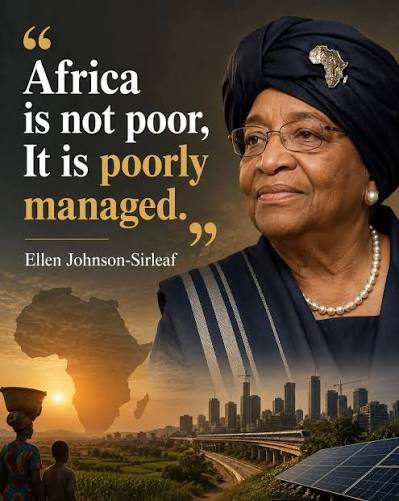
Africa’s greatest development crisis is not a shortage of natural resources, educated people or economic opportunity. It is the failure to build political and economic institutions strong enough to turn those assets into broad-based prosperity.
For decades, Africa’s difficulties have been explained through colonialism, geography, corruption, ethnic divisions, foreign interference and, more recently, the legacy of global inequality. These explanations contain important truths. But they can also become convenient excuses if they prevent African societies from confronting a harder question:
Why have so many African states struggled to build institutions that serve citizens rather than political elites?
The answer cannot simply be that colonialism destroyed African institutions. Nor can it be that Africa is inherently disadvantaged. The deeper problem is that, in many countries, independence changed the occupants of political power without fundamentally changing the structures through which power and wealth were distributed.
The colonial state was largely designed to extract. In too many cases, the postcolonial state inherited that machinery and simply changed who controlled it.
That is where Africa’s development crisis begins.
Independence did not automatically produce nation-building
Political independence was one of the greatest achievements of the 20th century. But independence itself was not the same thing as institutional transformation.
Across much of the continent, new governments inherited borders, bureaucracies, security structures and economic systems that had been designed for colonial administration rather than inclusive national development.
The challenge for the first generation of African leaders was therefore enormous: they had to create nations while simultaneously governing states whose institutions were often weak, fragmented or designed for purposes very different from those of their newly independent populations.
Some leaders understood the scale of that challenge.
Kwame Nkrumah, Julius Nyerere, Léopold Sédar Senghor and others attempted, in different ways, to create national political projects that could unite populations divided by colonial borders, languages, ethnic identities and competing regional interests.
Their experiments were imperfect. Some became authoritarian. Some economic policies failed. Some governments accumulated too much power.
But they understood something that contemporary African politics often appears to have forgotten:
A country cannot be built merely by winning elections. It must be built through institutions, ideas and a shared national purpose.
Today, politics in many African countries has become increasingly transactional. Political parties campaign around personalities. Politicians distribute patronage. Public institutions become instruments of political survival. State resources become prizes to be captured rather than assets to be administered.
The result is a vicious cycle.
Weak institutions produce weak accountability. Weak accountability encourages elite capture. Elite capture produces poor public services. Poor services undermine citizens’ confidence in government. And declining public confidence further weakens the legitimacy of the state.
The problem therefore becomes larger than corruption.
It becomes a crisis of political incentives.
Africa’s problem is not simply corrupt politicians
It is tempting to explain Africa’s failures by pointing at corrupt leaders. But this analysis is too easy.
If removing one politician automatically solved a country’s institutional problems, Africa would have transformed decades ago.
The more difficult question is why political systems repeatedly produce similar behaviour regardless of who occupies the presidential palace.
A politician who enters office promising reform can quickly discover that the political system rewards loyalty more than competence, patronage more than performance and short-term political survival more than long-term national planning.
This is why institutional reform matters more than political personalities.
A strong institution should be capable of surviving a bad president.
A strong judiciary should not depend on the political preferences of the government of the day. A professional civil service should not become an employment agency for ruling-party supporters. A parliament should scrutinise government rather than simply endorse it. Public procurement should serve the taxpayer rather than politically connected businesses.
And elections should determine who governs, not determine who gets access to the national treasury.
Until these principles become embedded in political institutions, changing leaders will often produce little structural change.
The tragedy of Africa’s natural wealth
Few contradictions are more striking than Africa’s enormous natural wealth existing alongside widespread poverty.
The continent possesses oil, gas, copper, cobalt, lithium, gold, diamonds, fertile land, enormous renewable-energy potential and a young population that represents one of the world’s largest pools of future labour and consumers.
Yet resource wealth can become a curse when institutions are weak.
The issue is not simply whether a country has oil or minerals. It is who controls them, who benefits from them and whether the institutions managing them are accountable to citizens.
When natural resources become the primary source of government revenue, leaders can become less dependent on citizens and more dependent on resource rents.
That can weaken the social contract.
Citizens should not have to beg governments for services that are supposed to be their right.
They should be able to demand schools because they pay taxes. They should demand functioning hospitals because public money is allocated for healthcare. They should expect roads, water, electricity and security because these are fundamental responsibilities of the modern state.
A government that regards public services as political favours has already weakened the relationship between citizen and state.
Nigeria illustrates the institutional dilemma
Nigeria demonstrates the enormous possibilities and dangers of this problem.
It has population scale, enormous entrepreneurial energy, natural resources, sophisticated professionals and one of Africa’s most influential cultural industries.
Yet its enormous potential has repeatedly collided with institutional weaknesses.
The problem is not that Nigerians lack ambition or talent. It is that political and economic institutions have often struggled to convert private dynamism into reliable public capacity.
The question should therefore not simply be whether Nigeria has enough resources.
It should be:
Why has the Nigerian state struggled to transform its resources and human capital into consistently functioning institutions?
That question points beyond individual administrations.
Nigeria needs institutions that can survive political transitions, enforce contracts, protect public resources, provide security and create predictable rules for businesses and citizens alike.
The same principle applies elsewhere on the continent.
Africa must stop treating the state as political property
Perhaps the most damaging idea in African politics is the assumption that whoever wins political power has acquired ownership of the state.
The state does not belong to a president.
It does not belong to a political party.
It does not belong to a tribe, region, military establishment or business elite.
The state belongs to its citizens.
Once that principle is accepted, the meaning of governance changes.
A government becomes a temporary administrator of public resources rather than the owner of those resources.
A minister becomes a public servant rather than a political gatekeeper.
A civil servant becomes an employee of the state rather than an employee of the ruling party.
And an election becomes a mechanism for choosing administrators rather than a contest for access to national wealth.
This is the institutional revolution Africa still needs.
The Gulf comparison deserves caution
The success of countries such as the United Arab Emirates and Qatar demonstrates that political institutions can take different forms and still produce significant state capacity.
Their experience also complicates the simplistic assumption that development requires one universal political model.
But Africa should not copy the Gulf.
The historical, demographic, economic and political circumstances are fundamentally different.
What African countries can learn is not necessarily the political structure itself, but the importance of state capacity, long-term planning, institutional continuity and disciplined investment.
Development requires governments capable of thinking beyond the next election.
It requires national projects that survive changes of administration.
It requires infrastructure strategies measured in decades rather than political terms.
It requires education systems designed for future economies rather than merely producing certificates.
And it requires governments capable of saying no to powerful interests when national interests demand it.
The colonial argument is important — but it cannot become an eternal explanation
Africa must continue confronting the consequences of colonialism.
Colonial borders, extractive economic systems, external debt structures, unequal global trade and historical exploitation continue to shape the continent’s political economy.
But there comes a point when historical explanation must become contemporary responsibility.
The generation governing Africa today did not create colonialism.
It is responsible for what it does with the institutions it inherited.
African governments cannot demand sovereignty from foreign powers while failing to establish accountability at home.
They cannot condemn external exploitation while allowing domestic elites to capture public resources.
They cannot demand foreign investment while offering investors unpredictable regulations, weak courts and politically connected competitors.
And they cannot speak constantly about African transformation while treating young Africans as an electoral demographic rather than as citizens whose economic futures require serious investment.
Africa needs a new political project
The continent does not merely need more elections.
It needs better institutions.
It does not merely need more political parties.
It needs political movements with credible national development programmes.
It does not merely need foreign investment.
It needs institutions capable of ensuring that investment creates productive economies, jobs and public revenue rather than enriching narrow networks.
It does not merely need natural resources.
It needs systems capable of converting natural wealth into human capital.
Most importantly, Africa needs to recover the idea of nation-building.
The central question should no longer be:
“Who gets power?”
It should be:
“What kind of state are we building, and what will that state look like for the ordinary citizen twenty years from now?”
That is the question African political leadership must answer.
Because the continent’s future will not ultimately be determined by how much gold lies beneath its soil, how much oil lies offshore or how much money foreign governments are willing to lend.
It will be determined by whether African societies can construct institutions that make power accountable, reward productivity, protect public resources and distribute opportunity beyond political and economic elites.
Africa does not lack wealth.
It does not lack intelligence.
It does not lack entrepreneurial energy.
What it too often lacks is an institutional architecture capable of turning these strengths into national prosperity.
The real African development revolution, therefore, will not begin when Africa discovers more resources. It will begin when African states build institutions that make those resources work for their citizens.