
By Desmond Nleya
JERUSALEM — Israel has rejected US President Donald Trump’s 15-point plan aimed at ending the war in Gaza, with Prime Minister Benjamin Netanyahu insisting that Israeli forces will not fully withdraw until Hamas is completely disarmed.
Speaking at a Cabinet meeting on Sunday, Netanyahu made clear that Israel would not accept the proposed arrangement in its current form.
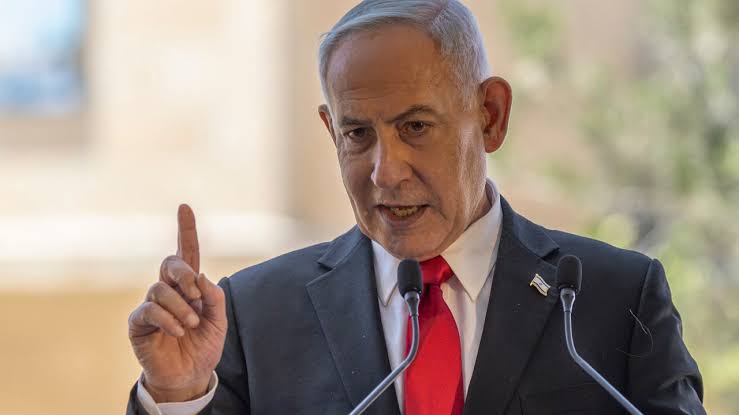
“I want to clarify this. Israel rejects the 15-point document,” Netanyahu said, stressing that Hamas must surrender all of its weapons before Israel considers a full withdrawal from Gaza.
Trump had presented the peace proposal as a potential breakthrough and said Hamas had agreed to lay down its arms. However, the plan calls for a phased Israeli military withdrawal from Gaza alongside the disarmament of Hamas.
Netanyahu said Israel’s position remained unchanged.
“When I say Hamas must be disarmed, I mean heavy weapons, lighter weapons, all weapons. We are talking about genuine disarmament, not a fictitious one,” he said.
The rejection represents an unusually public disagreement between the Israeli government and the Trump administration over how to bring the Gaza conflict to an end.
Netanyahu acknowledged that Israel was continuing discussions with Washington, saying some US proposals were acceptable while others were not.
“We know how to stand up to these things,” he said.
He also pledged that the Israeli military would continue taking action against what he described as threats to Israeli forces and civilians.
“Once again, the existence of Israel and the security of all Israeli citizens is not up for negotiation. We stand firm on these interests,” Netanyahu said.
The Israeli prime minister further ruled out the establishment of a Palestinian state in Gaza or the West Bank for as long as he remains in office.
Meanwhile, Israeli forces have continued carrying out strikes in Gaza despite a ceasefire agreement reached in October last year.
Palestinian officials say about 1,200 people, mostly women and children, have been killed in Israeli strikes since the ceasefire began.
The latest development raises fresh questions over the future of Trump’s peace initiative and whether Washington can bridge the growing differences between its proposed settlement and Israel’s demands.