
By Desmond Nleya
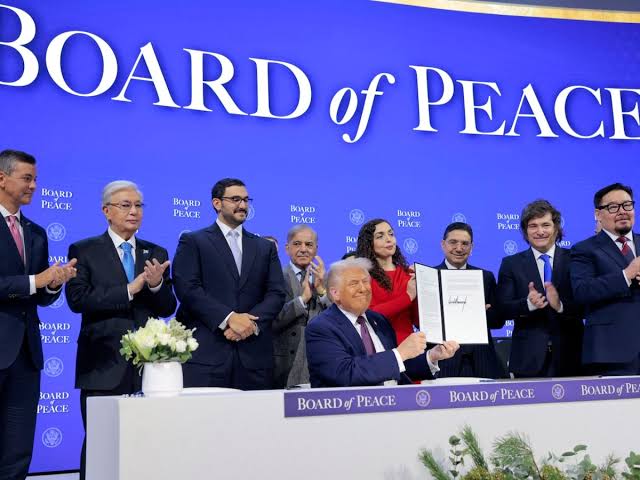
The body established to oversee peace, reconstruction and governance in Gaza has failed to deliver on its promises. Six months after its creation, the Board of Peace has produced little more than diplomatic statements while conditions on the ground continue to deteriorate. Rather than serving as a pathway to lasting peace, it has become an institution with limited authority, weak accountability and no meaningful ability to enforce the agreements it was created to supervise.
Recent optimism followed US President Donald Trump’s announcement that Hamas had agreed to move towards disarmament as part of the next phase of the Gaza ceasefire agreement. While regional governments welcomed the development, the reality remains far more complicated.
Hamas has repeatedly stated that any surrender of its weapons depends on Israel fulfilling its own obligations under the ceasefire. Those commitments, according to Palestinian officials and many observers, have not been fully implemented. Yet the Board of Peace has shown little willingness or ability to ensure compliance by either side.
This highlights the central weakness of the institution. It was designed to oversee reconstruction, facilitate Israeli withdrawal from Gaza and coordinate an international stabilisation force. Instead, it has struggled to fulfil even its most basic responsibilities.
Reconstruction has barely begun despite ambitious promises that Gaza would rapidly be rebuilt. Most displaced Palestinians continue living in temporary shelters while essential infrastructure remains devastated.
Instead of launching a comprehensive rebuilding programme, the board has shifted its focus towards a limited pilot development near Rafah. Critics argue that such projects do little to address the broader humanitarian catastrophe affecting millions across the Gaza Strip.
Even more controversial are proposals that would allow the board to make use of Palestinian land and property under special administrative powers. Opponents fear this could legitimise long-term changes to land ownership without the consent of those displaced by the conflict.
Meanwhile, Israeli military operations and territorial control have continued during the ceasefire period. Civilian casualties remain high, homes continue to be demolished, and areas under Israeli control have expanded significantly.
Despite these developments, the Board of Peace has remained largely silent. Rather than publicly addressing alleged violations by all parties, its statements have focused primarily on Hamas as the principal obstacle to progress.
Such an approach raises serious questions about the body’s neutrality. A peace mechanism cannot succeed if it is widely perceived as applying different standards to the parties involved.
The board has also failed to establish effective control over humanitarian assistance entering Gaza. Although its founding framework envisioned independent oversight of aid distribution, Israel continues to exercise substantial authority over what assistance enters the territory and how it is managed.
International confidence in the institution has steadily declined. Several influential countries have chosen not to participate, while others have reduced or suspended their commitments to the proposed international stabilisation force.
Financial support has been equally disappointing. Despite initial funding announcements worth billions of dollars, very little money has reportedly reached reconstruction projects. Instead, critics argue that administrative costs have consumed resources while ordinary Palestinians continue to face desperate living conditions.
Perhaps most troubling are reports that the board has explored legal protections that would shield its officials and affiliated personnel from future prosecution. Any international body tasked with governing occupied territory should be fully accountable under international law, not insulated from legal scrutiny.
For these reasons, it is becoming increasingly difficult to argue that the Board of Peace remains a credible mechanism for resolving the crisis.
The responsibility for Gaza should instead return to the United Nations, where established legal frameworks, recognised humanitarian agencies and internationally accepted accountability mechanisms already exist.
Although the UN has often been criticised for its inability to resolve the Israeli-Palestinian conflict over many decades, it remains the only institution with broad international legitimacy and a legal foundation rooted in international law.
Its agencies, particularly those responsible for Palestinian refugees and humanitarian assistance, possess decades of experience working in Gaza and are better positioned to coordinate relief, reconstruction and civilian protection.
A UN-led framework would also strengthen transparency in the management of international funding while preserving Gaza’s recognised legal status under international law.
Any future international stabilisation force would likely receive broader global participation if deployed under a United Nations mandate rather than through an independent political body. Such legitimacy could encourage greater international cooperation while helping protect civilians in both Gaza and the occupied West Bank.
The international community now faces a critical decision. Continuing to rely on a mechanism that has failed to demonstrate effectiveness risks prolonging humanitarian suffering and political deadlock.
If peace, reconstruction and long-term stability remain the ultimate goals, then responsibility should be transferred back to the United Nations, where internationally recognised legal principles, broader global participation and established humanitarian institutions offer a stronger foundation for any future political settlement.
Only a credible, accountable and internationally recognised framework can begin rebuilding trust and creating conditions necessary for a lasting peace.