
By Staff Reporter
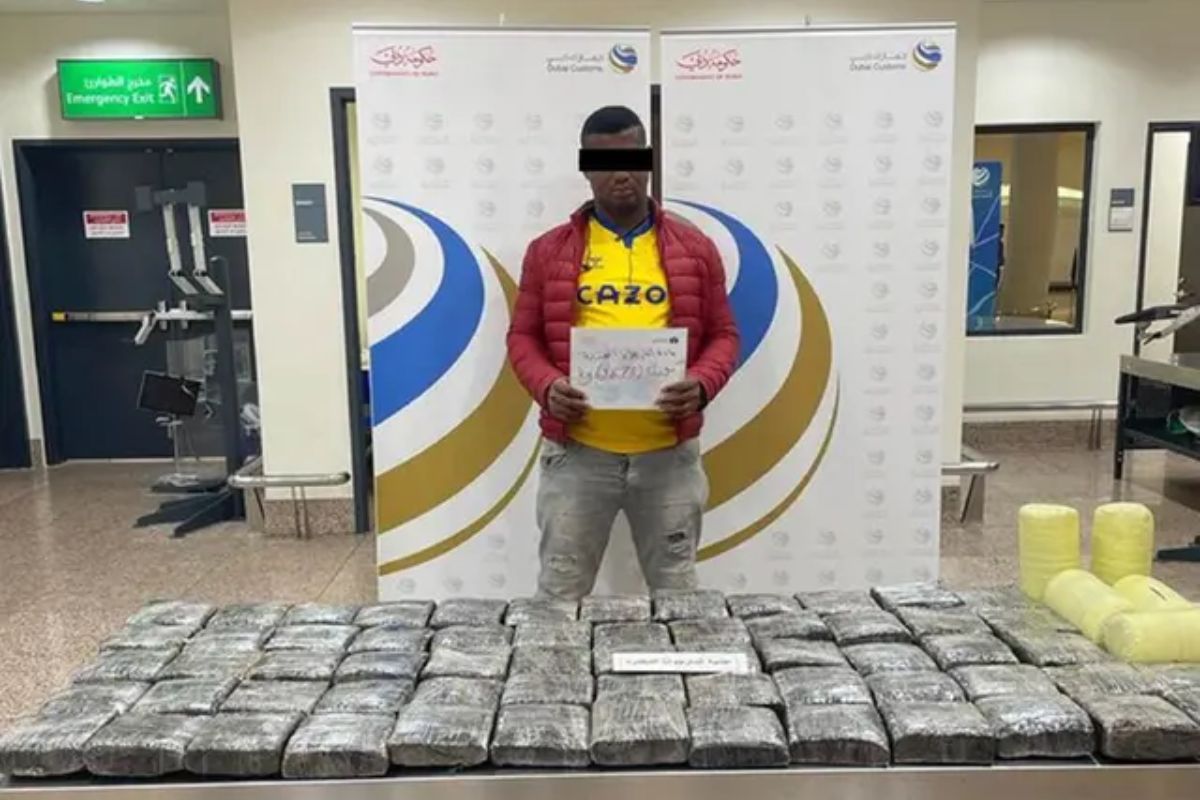
Dubai: A drug trafficker who turned Dubai International Airport’s transit area into a command centre for international drug deals has been arrested after a thorough 45-day surveillance operation by Dubai Police, a senior anti-narcotics official revealed.
The suspect believed he had found a loophole that would shield him from law enforcement by remaining inside the airport’s transit zone rather than formally entering the UAE. Instead, anti-narcotics officers monitored him around the clock, tracking his movements, meetings and communications before arresting him as he moved to collect a hidden drug shipment in Dubai.
Speaking on the Arab Podcast platform, Bin Muwaiza also shed light on drug smuggling methods, airport detection technologies, the risks of carrying luggage for strangers and Dubai Police’s approach to handling certain humanitarian cases involving young offenders and tourists unfamiliar with UAE drug laws.
Airport transit area used as trafficking hub
According to Bin Muwaiza, the suspect created the impression that he had left the UAE while in reality remaining inside the airport’s transit area.
Believing that not officially entering the country would place him outside the scope of security monitoring, he used the transit zone as a base to coordinate drug deals involving associates in multiple countries.
From inside the airport, he met contacts arriving from abroad, organised handovers and directed the movements of accomplices, while drug consignments had already been hidden at locations across Dubai.
Rather than making an immediate arrest, Dubai Police launched a covert operation aimed at uncovering the full extent of the network.
For 45 consecutive days, anti-narcotics officers monitored the suspect’s daily routine, documenting where he went, what he bought, what he ate and whom he met. Investigators also analysed the frequency and purpose of his meetings and mapped his connections to the wider trafficking network.
The moment he left the transit area to retrieve a hidden drug shipment and prepare it for delivery, officers moved in and arrested him.
Bin Muwaiza said the operation demonstrated that the airport transit zone, like all other ports of entry, falls fully under UAE sovereignty and security jurisdiction and cannot be used as a safe haven for criminal activity.
Smuggling drugs inside the body
In another part of the interview, Bin Muwaiza revealed that some trafficking networks continue to use body concealment methods, despite a decline in such cases in recent years.
He described the method as extremely dangerous, warning that the rupture of a single capsule inside the body could cause immediate death.
“It is effectively a time bomb carried inside the body,” he said.
While UAE airports are equipped with advanced screening systems capable of detecting such attempts, Bin Muwaiza noted that many arrests begin with the observations and experience of anti-narcotics officers.
Investigators often look for a combination of suspicious indicators, including:
• Refusing food and drinks throughout a flight.
• Travelling without any luggage.
• Booking a return flight within one or two days.
Warning to travellers
Bin Muwaiza urged travellers never to carry luggage, parcels or bags on behalf of other people, regardless of the circumstances.
He warned that individuals could unknowingly transport narcotics or other prohibited items and become implicated in serious criminal offences without being aware of the contents.
Dubai Police deports 18 teenage tourists
Bin Muwaiza also highlighted Dubai Police’s efforts to balance law enforcement with humanitarian considerations in cases that do not involve trafficking or organised criminal activity.
After renting accommodation, the teenagers were caught consuming different types of narcotic substances four to five days after entering the emirate.
According to Bin Muwaiza, prosecuting the group could have left them with criminal records and lasting legal consequences.
Instead, Dubai Police opted for a corrective approach.
The move was intended to serve as both a deterrent and an opportunity for rehabilitation while protecting the teenagers’ futures.
Visitors unaware of UAE drug laws
Bin Muwaiza said Dubai Police also encounters tourists arriving from countries where substances such as cannabis are legal or widely tolerated and who may be unaware of UAE regulations.
He explained that the law provides mechanisms for dealing with such situations.
The violation is recorded electronically, enabling authorities to track repeat offences.
A second violation may attract higher penalties, while a third offence is treated as a criminal case.
Bin Muwaiza added that a similar approach may apply in some minor personal drug-use cases where individuals are not involved in trafficking, facilitating drug use or posing a threat to society. In such cases, written undertakings may be deemed sufficient without escalating the matter into criminal proceedings.
• 45 days: Length of surveillance operation that led to the arrest of the airport transit-zone trafficker.
• 1 kilogram: Approximate weight of narcotics some couriers conceal inside their bodies.
• 18 underage tourists: Deported after being caught using drugs within days of arriving in Dubai.
• 90per cent suspicion rate: Confidence level officers may reach when multiple behavioural indicators associated with internal drug concealment are present.