
By Desmond Nleya
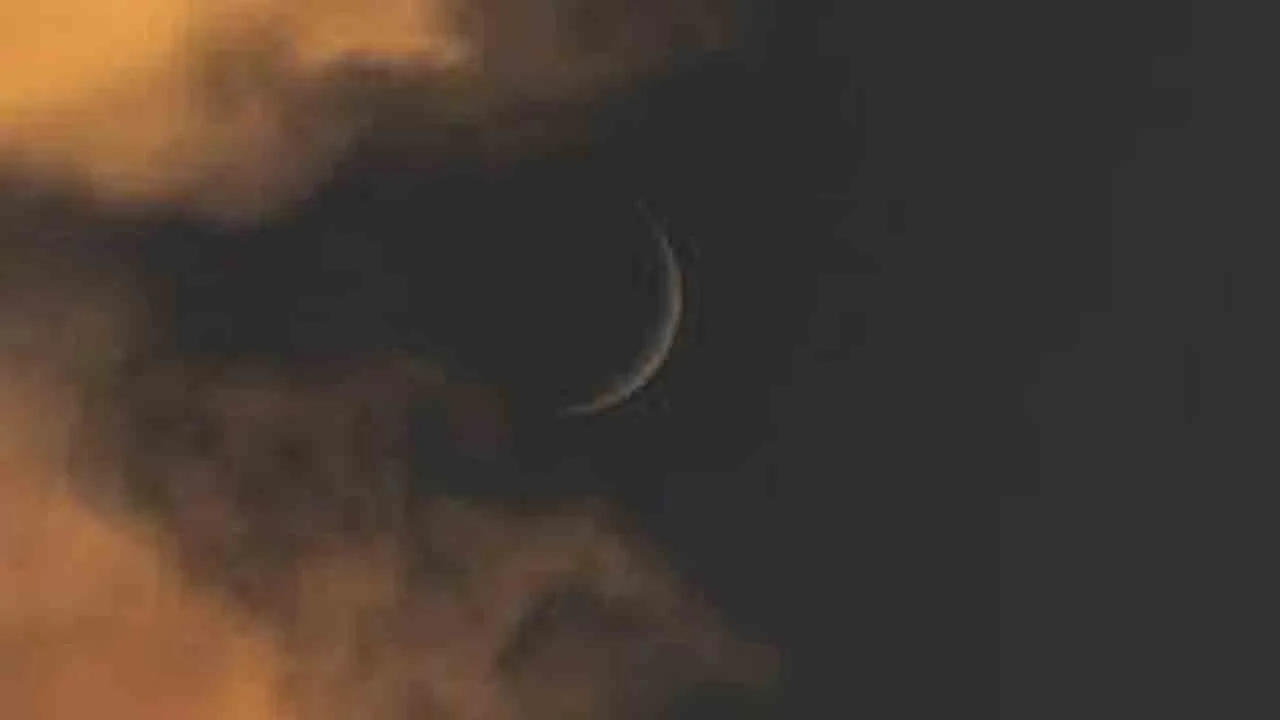
Most Muslim countries are expected to attempt sighting the crescent moon marking the start of Ramadan 1447 AH on Tuesday, February 17, but astronomers say visibility will be astronomically impossible across the Arab and wider Islamic world. As a result, Thursday, February 19, is now considered the most likely first day of Ramadan for countries that rely strictly on confirmed moon sighting.
According to the International Astronomical Center (IAC), the moon on Tuesday will not have moved far enough from conjunction with the sun to form a visible crescent—whether by the naked eye, telescopes, or even advanced astronomical imaging. This conclusion is consistent across all internationally recognised crescent-visibility criteria, including models developed by Ibn Tariq, Fotheringham, Maunder, Bruin, Mohamed Ilyas, the South African Astronomical Observatory (SAAO), Yallop and Odeh.
All these standards agree that crescent visibility on Tuesday evening is either impossible or entirely unfeasible anywhere in the Arab or Islamic world.
As a result, countries that require an authenticated crescent sighting are expected to complete 30 days of Shaaban on Wednesday, with Ramadan beginning on Thursday, February 19. A limited number of countries that apply alternative calculation-based criteria may declare Ramadan a day earlier, on Wednesday, February 18.
Why the Crescent Cannot Be Seen on Tuesday
Astronomers explain that the moon’s invisibility is due to its position relative to the sun at sunset. In eastern parts of the Islamic world, the moon will set before the sun. In central regions, it will set at the same time, while in western areas it will set only minutes after sunset—far too briefly for the crescent to form or be observed.
Importantly, calculations are based on the lower edge of the lunar disc, where the crescent would actually appear, rather than the upper edge commonly used in moonset calculations. This method provides a more accurate assessment of visibility.
In Jakarta, the moon will set six minutes before sunset. In the UAE, it will set one minute before sunset, while in Riyadh the moon’s lower edge will disappear 42 seconds before sunset. In Tabuk—the Saudi location with the longest lunar presence—the moon will set exactly at sunset, with a surface age of just one hour and 49 minutes and a sun-moon separation of only one degree. Similar conditions will be observed in Amman.
In Cairo, the moon will set two minutes after sunset, with a separation of 1.3 degrees, while in Algiers it will remain above the horizon for only six minutes.
Under such conditions, crescent sighting is ruled out by the Danjon limit, established by French astronomer André Danjon, which shows that a crescent cannot be seen— even with optical aid—if the angular distance between the moon and the sun is less than about seven degrees. All regions on Tuesday fall well below this threshold.
Not Visible Even With Advanced Imaging
Even the most sophisticated crescent-imaging technologies, which use high-sensitivity cameras and real-time image processing, will not be effective on Tuesday. At best, the moon’s separation from the sun at sunset will be around two degrees, far below what is required for detection.
Historical records support this conclusion. There has never been a confirmed naked-eye sighting of the crescent below 7.6 degrees, nor a confirmed telescopic sighting below six degrees.
Further reinforcing this assessment, an annular solar eclipse will occur on Tuesday afternoon, visible from southern Africa and Antarctica, coinciding with sunset across large parts of Asia. A solar eclipse represents a visible conjunction of the sun and moon, underscoring the impossibility of crescent visibility at that time or shortly thereafter.
Astronomers have also warned against false sighting claims, noting that Venus will be visible low in the western sky near the moon’s position, increasing the risk of misidentification—a problem documented in past observation campaigns.
Wednesday Offers Clear Visibility
Several countries—including Bangladesh, Pakistan, Iran, Morocco, Mauritania and parts of non-Arab Africa—will observe the crescent on Wednesday, February 18, their 29th day of Shaaban. In these regions, Ramadan is expected to begin on Thursday, February 19, or Friday, February 20, depending on local sightings and weather conditions.
Conditions on Wednesday evening will be significantly more favourable. In Abu Dhabi, the moon will remain above the horizon for 58 minutes after sunset, with an age of 24 hours and 29 minutes. In Mecca, it will set after 59 minutes, aged 25 hours and 37 minutes. In Amman and Jerusalem, visibility will extend to 65 minutes, while in Cairo it will last 64 minutes. In Rabat, the moon will remain above the horizon for 73 minutes, with an age nearing 30 hours.
Under these conditions, astronomers say the crescent should be easily visible to the naked eye across much of the Arab world, provided skies are clear.
For context, the shortest confirmed lunar stay above the horizon for a naked-eye sighting is 29 minutes, while the youngest crescent ever observed was 15 hours and 33 minutes old—both well within Wednesday’s parameters.
Astronomers and Islamic jurists have reiterated that there is no religious obligation to attempt crescent sighting in regions where calculations definitively show the moon has already set before sunset. This position was endorsed at the Second Emirates Astronomical Conference and supported by prominent scholars, including Sheikh Abdullah bin Mani’, a member of Saudi Arabia’s Council of Senior Scholars, who has long advocated for the use of definitive astronomical knowledge in such cases.