
By Desmond Nleya
The world has spent years tiptoeing around Donald Trump, indulging his theatrics, excusing his excesses, and mistaking fear for diplomacy. Too many leaders chose comfort over courage, silence over principle. They convinced themselves that appeasing a bully was strategy. In truth, it was surrender.
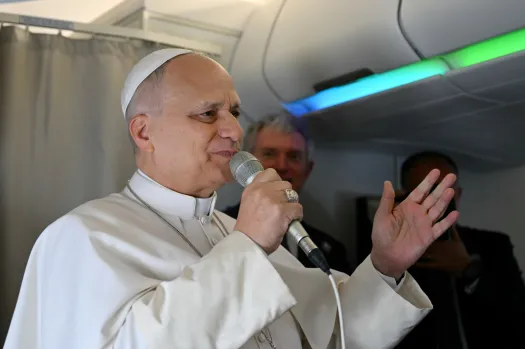
Then came Pope Leo XIV.
In a global landscape crowded with cautious politicians and carefully scripted statements, Leo has done something rare. He has spoken plainly. He has refused to bend. And in doing so, he has exposed just how hollow much of modern leadership has become.
Trump’s approach to power has always been blunt: dominate, threaten, and demand loyalty. For years, that formula worked not because it was effective diplomacy, but because too many leaders lacked the spine to challenge it. They flattered him, softened their criticism, and hoped to avoid becoming targets. Instead, they enabled him.
Leo has rejected that entire playbook.
Where others hedge, he confronts. Where others dilute their language, he sharpens his. And where others calculate political cost, he speaks from moral conviction. His condemnation of threats against Iran was not wrapped in diplomatic ambiguity. It was direct, unapologetic, and grounded in a simple truth: targeting innocent people is indefensible, no matter who does it.
This is what makes his stance so disruptive.
For a political class accustomed to evasiveness, Leo’s clarity feels almost radical. He has not only continued the moral resistance associated with Pope Francis, but intensified it. There is no careful balancing act here, no attempt to appease power. There is only a firm refusal to legitimize it.
And predictably, that refusal has provoked outrage.
Trump and his allies, who often cloak aggression in religious language, have found themselves directly challenged. Leo has dismantled that hypocrisy without hesitation. His message is unmistakable: a God of peace cannot be invoked to justify war. Those who try reveal more about their own ambitions than their faith.
Even beyond Washington, the criticism lands. Figures like Benjamin Netanyahu, who operate with similar displays of unchecked power, are not immune. Leo’s warning about the “delusion of omnipotence” is not subtle. It is a direct indictment of leaders who confuse strength with domination and authority with impunity.
What is perhaps most telling is the response from the United States. Reports of veiled threats from Pentagon officials only reinforce the very point Leo is making. When power is challenged, it lashes out. When it cannot persuade, it intimidates.
Yet Leo remains unmoved.
His refusal to be intimidated is precisely what makes this moment significant. He is not commanding armies or wielding economic leverage. His influence is moral, and that is exactly why it unsettles political strongmen. It cannot be bought, coerced, or easily dismissed.
Trump’s brief and bizarre attempt to portray himself as a Christ-like figure only underscored the contrast. On one side stands a leader consumed by image, ego, and dominance. On the other stands a figure insisting on humility, restraint, and accountability.
The difference is not subtle. It is defining.
For once, the bully has encountered someone who will not yield, not negotiate his principles, and not remain silent for the sake of convenience. And that is what makes this confrontation so uncomfortable for Trump and so revealing for the rest of the world.
Because it exposes an inconvenient truth: strength was never about power or intimidation. It was always about the courage to stand firm when it matters most.
And for far too long, that courage has been in short supply.