
By Desmond Nleya
GENEVA, June 16, 2026 — The United States and Iran have agreed on a peace framework aimed at ending months of conflict in the Middle East, reopening the strategic Strait of Hormuz, and eliminating Iran’s enriched uranium stockpile under international supervision, officials said on Tuesday.
The agreement, scheduled for formal signing in Geneva on June 19, marks the most significant diplomatic breakthrough between Washington and Tehran in years. US Vice President JD Vance said the International Atomic Energy Agency (IAEA), with support from the United States, will oversee the destruction of Iran’s enriched uranium reserves as part of the accord.
Financial markets reacted swiftly to the announcement. Global oil prices plunged amid expectations that energy exports through the Strait of Hormuz will gradually resume, while US stock markets closed at record highs on optimism that the conflict-driven economic uncertainty is easing.
Despite the diplomatic breakthrough, major shipping companies remain cautious. Japan’s Mitsui O.S.K. Lines, one of the world’s largest maritime operators, warned that commercial transit through the Strait of Hormuz may take weeks to normalize.
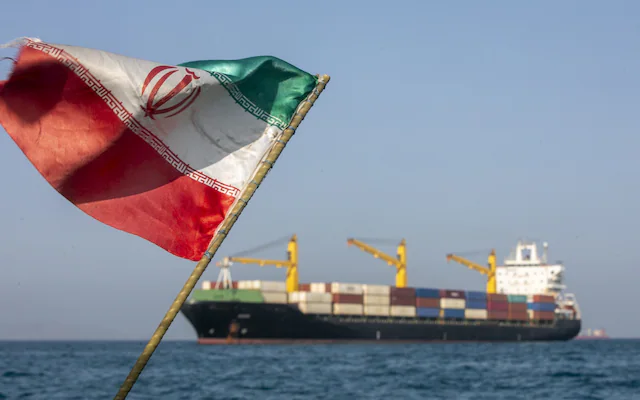
Chief Executive Jotaro Tamura told the Financial Times that shipowners will require clear evidence that security conditions in the waterway have improved before fully resuming operations. The strait, which carries roughly 20 percent of global oil and liquefied natural gas supplies, has been severely disrupted since the conflict erupted on February 28 following US-Israeli military strikes.
Tamura said shipping companies are likely to wait at least several weeks—and possibly up to a month—before restoring regular passage through the corridor, citing lingering concerns over naval mines, security threats and elevated insurance costs.
Meanwhile, US President Donald Trump stated that oil tankers have already begun moving through what he described as a “safe and secure” southern route in the Gulf, signaling early efforts to restore energy flows to global markets.
In a separate development, the Bank of Japan raised its benchmark interest rate to 1 percent from 0.75 percent, the highest level in 31 years, citing inflationary pressures linked to the Middle East energy crisis and the prolonged weakness of the yen.
The Geneva signing is expected to provide further details on enforcement mechanisms, security guarantees and the timeline for implementing the agreement, which could reshape regional stability and global energy markets in the months ahead.