
By Desmond Nleya
Kampala, Uganda — Ugandan authorities have deployed soldiers and armored vehicles across parts of the capital, Kampala, as the country prepares for a tightly contested general election, a move that has heightened tensions and drawn criticism from opposition figures who fear increased authoritarianism.
The military presence intensified over the weekend, with troops patrolling major streets and armored trucks positioned in key areas of the city. Authorities say the deployment is intended to deter violence during the election period.
“There is no cause for alarm,” military spokesperson Col. Chris Magezi said, dismissing claims that the move undermines democracy. “However, we do not take threats of violence during the election period by some political actors and their supporters lightly.”
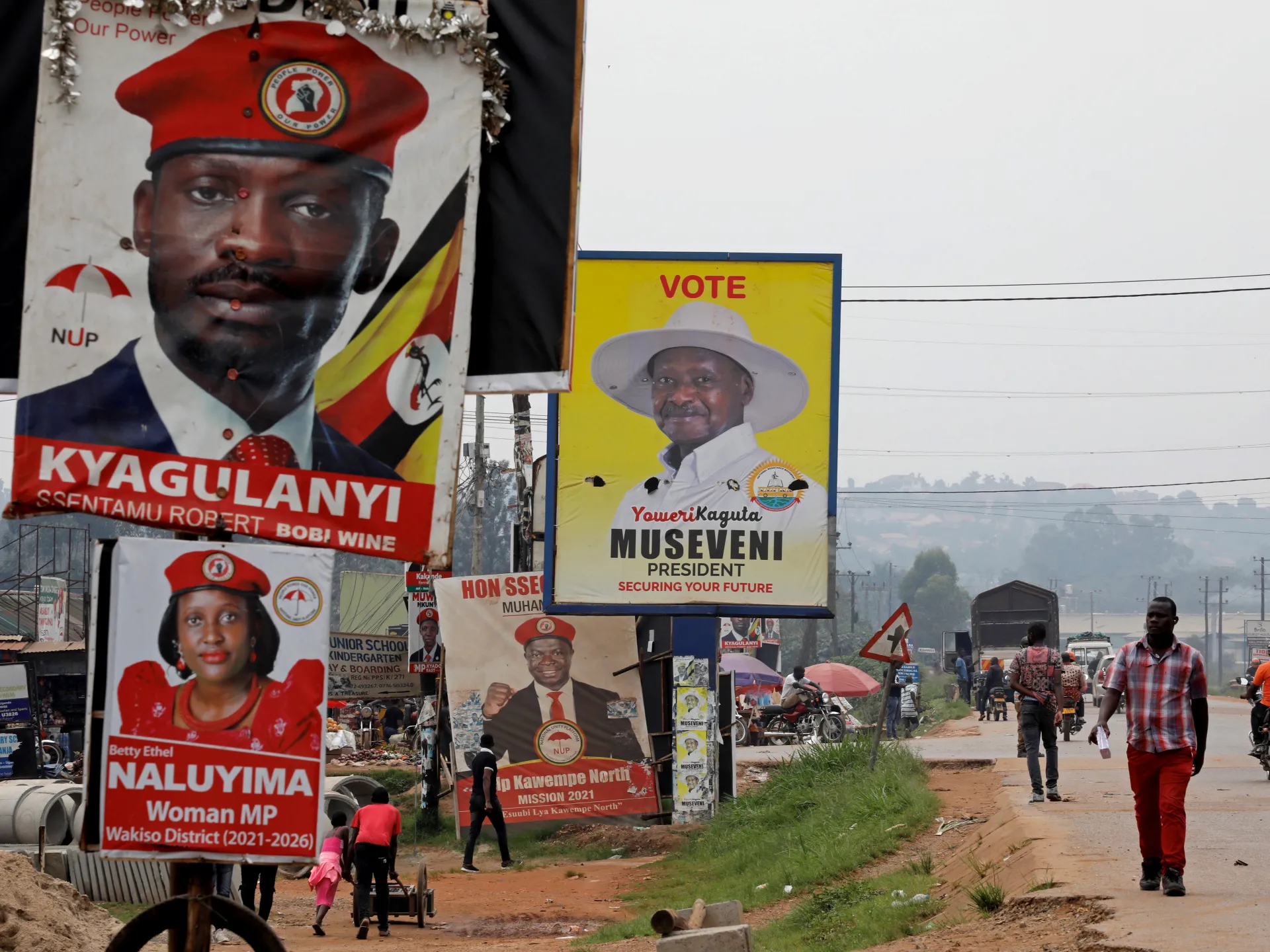
The security buildup comes as President Yoweri Museveni and his challengers wrapped up their final campaign rallies ahead of Thursday’s vote. Museveni, Africa’s third-longest-serving leader, is seeking a seventh term that would extend his rule toward five decades. His main challenger is opposition leader and pop star-turned-politician Bobi Wine, whose real name is Kyagulanyi Ssentamu.
Less than 48 hours before voting day, the Uganda Communications Commission ordered mobile internet providers to temporarily suspend services, citing concerns over misinformation, electoral fraud, and incitement to violence. Internet access will only be restored after an official notice from the commission.
Uganda, a nation of about 45 million people, has 21.6 million registered voters. In addition to Museveni and Wine, six other candidates are contesting the presidency. Despite the competition, the Brussels-based International Crisis Group recently said Museveni is “likely to retain power” in the upcoming polls.
Incumbent vs. a youthful challenger
The election revisits the fierce rivalry between Museveni and Wine that defined the 2021 vote. In that election, Wine energized young and urban voters, securing 35% of the vote against Museveni’s 58%—the lowest vote share Museveni has recorded since he first contested elections nearly three decades ago.
Wine, now 43, has maintained strong support in Kampala and parts of eastern Uganda. His campaign events have often been marked by heavy security, with the opposition leader sometimes wearing a flak jacket and helmet. Wine and human rights groups, including Amnesty International, accuse security forces of attacking opposition supporters using tear gas and live ammunition—claims the government denies.
Museveni, 81, continues to draw loyal backing from northern Uganda and his western home region. Supporters credit him with restoring stability after years of turmoil and with hosting hundreds of thousands of refugees from neighboring countries.
The president has frequently portrayed Wine as unpatriotic and aligned with foreign interests, accusations the opposition leader strongly rejects. Within the ruling National Resistance Movement, some officials have openly suggested that Museveni would not hand over power to Wine even if he were to win.
Museveni’s campaign slogan, “protecting the gains,” has drawn mixed reactions. While supporters see it as a promise to safeguard stability, critics argue it hints at entrenched power and unchecked corruption.
“I was born when Museveni was in power,” said Farouk Mugaya, a 37-year-old motorcycle taxi operator in Kampala. “They have had enough time to protect the gains. I want to see change.”
Mugaya plans to travel to his hometown in eastern Uganda to vote, despite doubts about the credibility of the process. “I want to say they stole the vote when I also voted,” he said.
Economic concerns also loom large. Many voters told the AP that unemployment and the rising cost of living are key issues.
“Uganda is very hard. Getting money is not easy,” said Denis Oraku, a mason working at a construction site near Kampala. “We have peace, but we have no jobs.”
Growing role of the president’s son
Museveni first seized power in 1986 as a guerrilla leader after years of civil war and the brutal rule of Idi Amin. Since then, he has won six elections, many of them marred by allegations of vote rigging and interference by security forces.
Critics argue that removing him through the ballot box remains difficult, especially as his grip on power increasingly relies on the military—now led by his son, Gen. Muhoozi Kainerugaba.
Kainerugaba, a four-star general, has stirred controversy through provocative social media posts, including remarks about invading neighboring Kenya and an unusual public offer of cattle as dowry to marry Italy’s prime minister. He has also openly stated his expectation to succeed his father, raising fears of dynastic rule.
“Time is not on his side,” political analyst Robert Kabushenga said on a popular podcast, referring to Museveni. “For the first time, he is really an outsider—because he does not represent the future.”
As Ugandans prepare to cast their ballots, the heavy military presence, internet shutdown, and long-standing political tensions have cast a shadow over what many see as a defining moment for the country’s democracy.