
By Staff Reporter
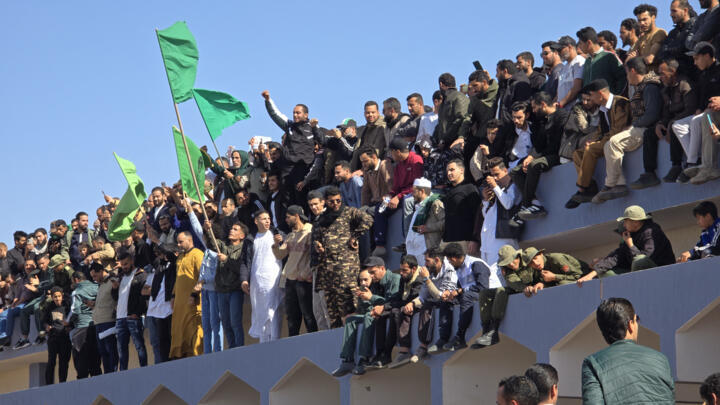
Thousands of mourners gathered in the Libyan town of Bani Walid on Friday to attend the funeral of Saif al-Islam Gaddafi, the son of former Libyan leader Muammar Gaddafi.
Saif al-Islam, who had once been viewed as a potential successor to his father, was shot dead by unidentified gunmen at his home in the north-western city of Zintan on Tuesday.
Bani Walid, a stronghold of the influential Warfalla tribe, along with Sirte — Muammar Gaddafi’s hometown — were among the last bastions of support for the longtime ruler during the 2011 Arab Spring uprising that ultimately led to his overthrow and killing.
Every year, Bani Walid commemorates the anniversary of the 1969 coup that brought Gaddafi to power. He ruled Libya for over four decades before being ousted during the rebellion.
The large turnout at Friday’s tightly secured funeral, including mourners who travelled from across the country, highlighted the deep political divisions that have persisted in Libya since 2011. The burial drew thousands of loyalists to the Gaddafi family.
“We are here to bid farewell to our beloved one, the son of our leader in whom we placed our hope and our future,” said Waad Ibrahim, who travelled nearly 300 kilometres from Sirte to attend the funeral.
She accused Libya’s rival eastern and western political factions of being responsible for his death.
“They met in France and agreed that the only obstacle in their path was Saif al-Islam,” she said, referring to a recent US-brokered meeting in Paris involving representatives from both rival administrations.
Officials from Libya’s two competing governments — the internationally recognised Government of National Unity based in Tripoli and the eastern-based Government of National Stability — did not attend the funeral.
On Thursday, Prime Minister Abdelhamid Dbeibah’s UN-backed administration condemned the killing, stating that “assassinations never bring stability, but instead deepen divisions.”
“The Libya we are striving for is a state governed by law and institutions, where disputes are resolved through dialogue and the will of the people,” Dbeibah said.
In Tripoli, resident Sabri Gachout suggested that Saif al-Islam’s death could pave the way for elections without his participation.
“They wanted to remove him from the electoral race so they could win. By assassinating him, they excluded him from the political scene. He had strong support and was a leader for us,” Gachout said.
In 2021, Saif al-Islam announced his intention to run for president. However, the elections committee disqualified his candidacy. The planned polls, intended to unify Libya under a UN-backed agreement, were later postponed indefinitely due to disputes over the constitutional framework and candidate eligibility.