
By Desmond Nleya
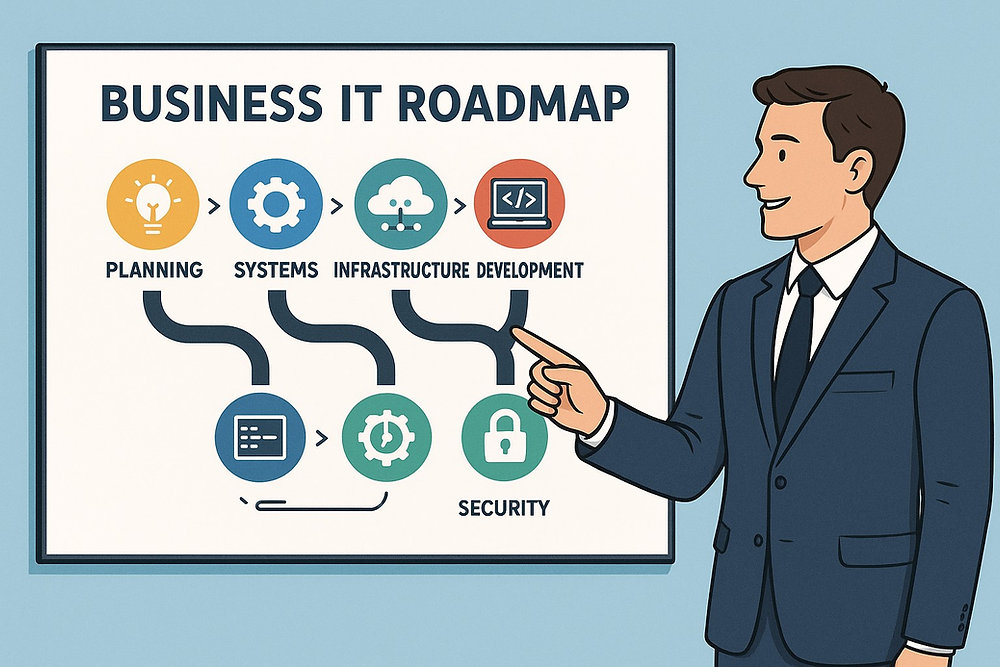
Every business begins with ambition, but ambition alone is not enough to produce results. Without a clear and structured path, even the strongest ideas risk drifting without direction. A business roadmap provides that structure. It is a high-level visual guide that outlines where a company is going and how it plans to get there, without getting lost in excessive detail.
Unlike traditional business plans that are often written once and rarely revisited, a roadmap is dynamic. It evolves as the business grows, adapts to new information, and responds to changing conditions. It offers both direction and flexibility, which is essential in today’s fast-moving environment.
What Makes a Roadmap Effective
A strong business roadmap is built on four essential components that work together to create clarity.
Milestones represent key achievements that signal real progress, such as acquiring a first major client or launching a completed product. These are outcomes rather than tasks.
Timelines place those milestones within a defined period, helping identify whether expectations are realistic before problems arise.
Key deliverables are the tangible outputs that contribute to milestones. These might include completed campaigns, signed agreements, or finalized reports.
Dependencies show the sequence of work by identifying which actions rely on others being completed first. This prevents inefficiencies and misaligned efforts.
When combined, these elements allow business leaders to see the full picture at a glance, understanding both progress and flow across the organisation.
Creating Alignment Across Teams
In many growing businesses, leadership has a clear vision that is not always shared across the entire team. Without alignment, departments may pursue conflicting priorities, slowing overall progress.
A roadmap solves this by making the strategy visible and accessible. It becomes a shared reference point that ensures everyone is working toward the same goals.
The process of building a roadmap also forces leaders to answer difficult but necessary questions. What are the top priorities? What must happen first? What will be postponed? This clarity strengthens decision-making and reduces confusion across the organisation.
A Single Source of Truth
One of the most valuable roles of a roadmap is its ability to unify different departments under a common understanding.
Marketing teams can plan campaigns based on accurate product timelines. Finance teams can assess spending within the broader strategic context. Human resources can anticipate hiring needs and prepare in advance.
This shared visibility reduces misunderstandings, minimizes unnecessary meetings, and allows teams to focus on meaningful work rather than constant clarification.
Managing Resources with Precision
Resources such as time, capital, and talent are always limited, especially in smaller businesses. A roadmap provides a structured way to allocate these resources effectively.
It reveals potential financial pressure when multiple initiatives overlap. It highlights capacity issues before they become critical. It also exposes misalignment, such as skilled employees working on low-priority tasks.
By making resource allocation visible, the roadmap enables proactive adjustments rather than reactive fixes.
Communicating Progress Clearly
Stakeholders such as investors, partners, and senior employees need to understand how the business is progressing, but they do not need excessive operational detail.
A roadmap communicates progress in a clear and concise way. It shows key milestones, upcoming initiatives, and overall direction without overwhelming the audience.
For employees, this clarity provides motivation. When people understand how their work contributes to a larger goal, their engagement and productivity naturally improve.
Different Types of Roadmaps
Not all roadmaps serve the same purpose. The most common types include:
A strategy roadmap, which focuses on the overall direction and long-term goals of the business.
A product roadmap, which outlines how a product or service will evolve over time.
A marketing roadmap, which details campaigns, content strategies, and promotional activities aligned with business goals.
When these roadmaps are aligned, the organisation operates with greater coordination and efficiency.
How to Build a Business Roadmap
Creating a roadmap requires thoughtful planning and realistic assessment.
It begins with gathering accurate information, including financial data, customer insights, and team capacity. From there, clear objectives must be defined. These should be specific and measurable, leaving no ambiguity about success.
Milestones are then identified to track progress toward those objectives. Dependencies are mapped to ensure proper sequencing, and timelines are assigned with realistic buffers to account for delays.
Finally, the roadmap should be reviewed with key team members and updated regularly to remain relevant.
Common Pitfalls to Avoid
Some roadmaps fail not because of poor intent, but because of avoidable mistakes.
Overcomplicating the document makes it difficult to understand and reduces its usefulness. Treating it as static quickly makes it outdated. Confusing it with a task list adds unnecessary detail and blurs its purpose.
Building a roadmap without team input often leads to unrealistic expectations, while trying to pursue too many priorities at once weakens focus and effectiveness.
Keeping It Practical as You Grow
In the early stages, a simple spreadsheet or shared document is often enough. As the business expands, more advanced tools can improve collaboration and visibility.
What matters most is not the tool itself, but consistency in updating and using the roadmap. A neglected roadmap holds little value, no matter how sophisticated it is.
The Real Value of a Business Roadmap
The early stages of a business are often chaotic, with multiple demands competing for limited attention. A well-structured roadmap brings order to that chaos.
It aligns teams, clarifies priorities, and provides a transparent view of progress. It helps leaders make informed decisions about where to focus time, money, and effort.
While it cannot eliminate uncertainty, it offers a stable guide that the entire organisation can rely on as conditions change.
A business roadmap is not simply a document. It is a disciplined way of thinking about growth, ensuring that effort is purposeful rather than scattered, and that progress is intentional rather than accidental.
Source: Dubai Focus