
By Shelton Muchena
There is a silence settling over Gaza that goes beyond the sound of bombs. It is the silence left behind when those tasked with telling the world what is happening are no longer able to do so. With foreign media barred from entering the territory, local journalists have become the last line of truth and increasingly, its casualties.
As Israeli strikes continue, the growing number of journalists killed is not just a statistic; it is a warning. Each death narrows the world’s view, each absence deepens the uncertainty, and each lost voice makes it harder to separate fact from shadow in a conflict already defined by its intensity and complexity.
The deaths of hundreds of journalists have marked one of the gravest tolls on the press in modern conflict. In a place where access is restricted, their loss does not simply represent personal tragedy it creates an informational blackout. The war goes on, but the world sees less of it.
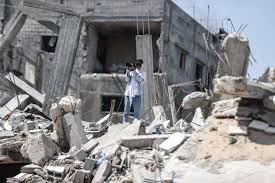
Local reporters, many of whom have refused to leave despite the risks, continue to document the devastation around them often while enduring the same conditions as those they are covering. They report from shattered streets, from overcrowded shelters, from hospitals stretched beyond capacity. And yet, many of their stories are now unfinished, cut short by the very violence they sought to record.
International organisations, including the Committee to Protect Journalists and Reporters Without Borders, have warned that the scale of journalist casualties is without recent precedent. Their concern is not only for the safety of media workers, but for the global consequences of their absence.
Without independent reporting, verification becomes harder. Without witnesses, accountability weakens. And without a clear flow of information, narratives begin to fragment, shaped as much by absence as by fact.
Under international humanitarian law, journalists are recognised as civilians and are entitled to protection, provided they are not directly participating in hostilities. The scale of the losses has therefore raised urgent legal and ethical questions about whether those protections are being upheld in practice.
But beyond legal frameworks lies a deeper concern what happens when a conflict continues, but fewer and fewer people are left to document it?
Already, the effects are visible. Images become scarcer. First-hand accounts diminish. The world begins to rely on partial glimpses rather than full pictures. In that uncertainty, misinformation can take hold, and the truth becomes harder to establish.
What is unfolding in Gaza is not only a humanitarian crisis, but a crisis of visibility. The killing of journalists does more than take lives it erodes the world’s ability to bear witness.
And in war, when the witnesses disappear, so too does the clarity of truth.