
By Staff Reporter
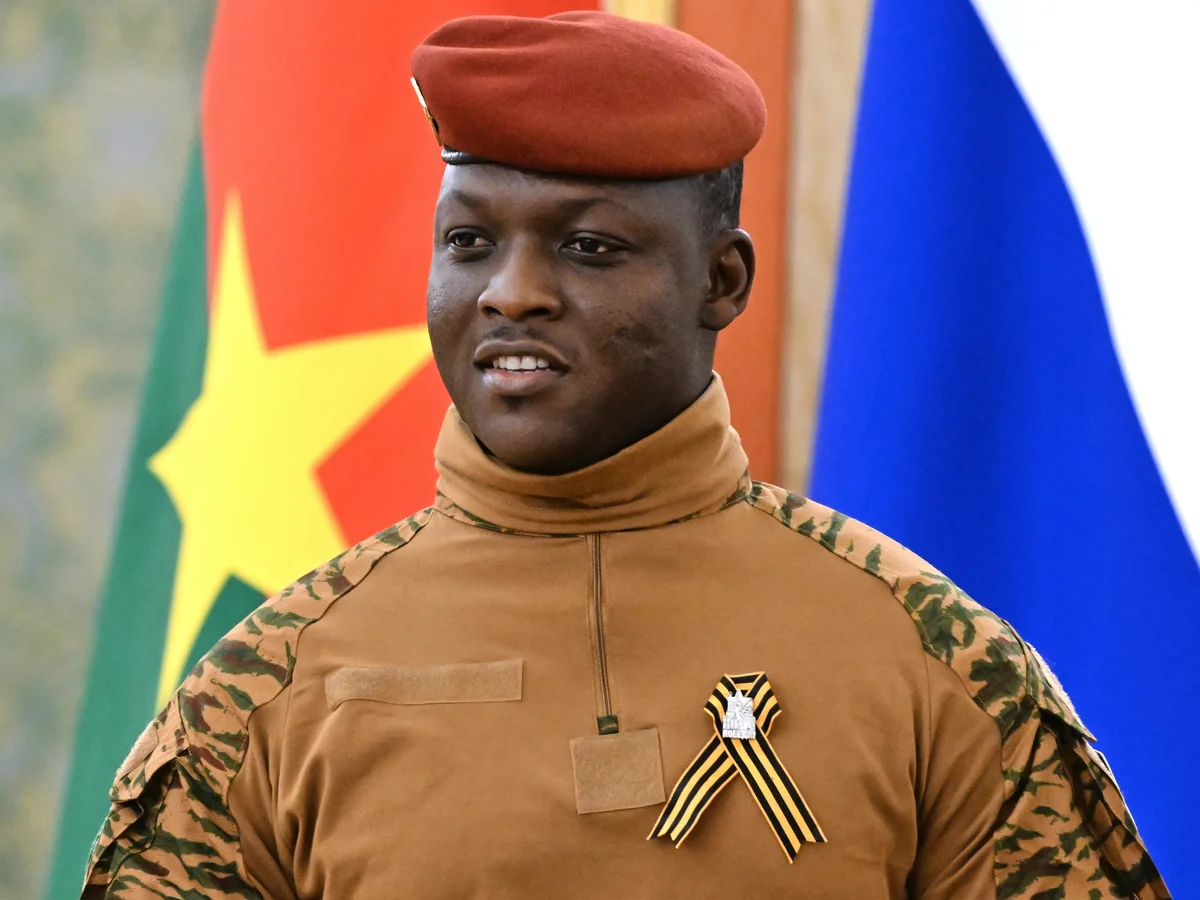
OUAGADOUGOU – Burkina Faso’s military leader, Captain Ibrahim Traoré, has openly rejected democratic governance and extended the country’s transition to civilian rule by five years, deepening concerns over the nation’s political future.
In a recent national address, Traoré urged citizens to abandon democratic ideals, describing them as ineffective and harmful in the African context. He argued that democratic systems have failed to protect civilians, particularly as Burkina Faso continues to battle a prolonged insurgency marked by widespread violence and instability.
Traoré, who seized power in a 2022 coup, has since tightened his grip on the West African nation. His administration has systematically dismantled key democratic institutions, including dissolving the electoral commission and formally banning all political parties. These parties had already been suspended following the coup but are now prohibited outright, effectively eliminating organized political opposition.
The decision to extend military rule delays a previously promised return to civilian governance, which had been scheduled for mid-2024. Under the new timeline, elections are unlikely to take place before the end of the decade.
Burkina Faso has been grappling with nearly a decade of jihadist violence linked to armed groups operating across the Sahel region. The conflict has claimed thousands of lives and displaced millions, creating one of the world’s most severe humanitarian crises. The military government maintains that strong centralized authority is necessary to combat the insurgency and restore national security.
However, international bodies have expressed growing alarm over the country’s political direction. The United Nations has called on authorities to lift restrictions on political activity and restore civil liberties, warning that shrinking democratic space could further destabilize an already fragile nation.
Analysts say Traoré’s stance reflects a broader trend in parts of West Africa, where military-led governments have increasingly challenged democratic norms, often citing security concerns as justification for prolonged rule.
As Burkina Faso moves further away from democratic governance, questions remain about the long-term implications for stability, regional security, and the rights of its citizens.
Source: AFP