
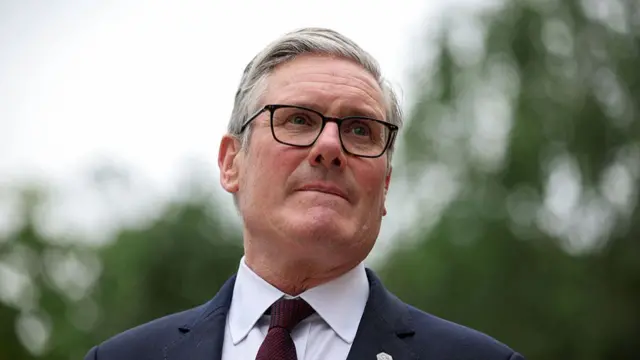
LONDON, June 22, 2026 — British Prime Minister Keir Starmer announced on Monday that he will step down as leader of the Labour Party and resign as Prime Minister, bringing an abrupt end to a premiership that began with a landslide election victory less than two years ago.
In a dramatic statement delivered outside 10 Downing Street, Starmer acknowledged that he had lost the confidence of many within his own parliamentary party and accepted that it was time for new leadership.
“The question my party is asking now is whether I am best placed to lead us into the next general election. I have heard the answer of my parliamentary party to that question, and I accept that answer with good grace,” Starmer said.
The announcement marks a major turning point in British politics and sets the stage for a closely watched Labour leadership contest. Starmer confirmed that nominations for his successor will open on July 9, with a new leader expected to be in place before Parliament returns from its summer recess in September.
Burnham Emerges as Favourite
Attention has immediately shifted to Andy Burnham, who is widely regarded as the frontrunner to replace Starmer.
Pressure on the Prime Minister intensified following Burnham’s decisive victory in a parliamentary election last week, where he defeated a candidate from Nigel Farage’s Reform UK party. The result energized Labour lawmakers who believe Burnham has the political skills and public appeal needed to revive the party’s fortunes ahead of the next general election.
Burnham’s strong communication style and political experience have made him a popular figure among Labour members seeking a fresh start after months of declining support under Starmer’s leadership.
Emotional Farewell
Speaking outside Downing Street, Starmer appeared emotional as he thanked colleagues, supporters, and his family for standing by him during his time in office.
His voice reportedly cracked as he paid tribute to his wife and children, bringing a personal note to an announcement that many in Westminster had anticipated for weeks.
Despite mounting speculation over his future, Starmer had publicly insisted as recently as Friday that he would contest any leadership challenge. However, developments over the weekend appear to have convinced him that stepping aside was the best course of action.
Markets Remain Calm
Financial markets reacted calmly to the news, with the British pound and government bond markets remaining largely stable in the immediate aftermath of the announcement.
Investors had increasingly expected a leadership change, limiting any major market shock.
However, economists warn that whoever succeeds Starmer will inherit significant economic challenges, including sluggish growth, high public debt, elevated borrowing costs, and growing pressure to increase spending on public services and defence.
Britain currently faces some of the highest borrowing costs among the Group of Seven advanced economies, leaving limited room for major new spending initiatives.
Political Uncertainty Ahead
While Burnham is seen as the leading candidate, questions remain about his approach to key issues including foreign policy, defence spending, taxation, and fiscal management.
Analysts note that any new prime minister will face the same difficult balancing act that confronted Starmer: delivering economic improvement while maintaining the confidence of financial markets.
Political observers say the transition represents both an opportunity and a risk for Labour, which won a commanding mandate in the last general election but has struggled to maintain public support amid ongoing concerns over living costs, public services, and immigration.
Seventh Prime Minister in a Decade
The resignation means Britain is set to have its seventh prime minister since the 2016 Brexit referendum, highlighting an extraordinary period of political instability in one of the world’s oldest democracies.
The rapid turnover of leaders reflects growing voter frustration over economic stagnation, pressure on public services, and successive governments’ inability to deliver sustained improvements in living standards.
As Labour prepares for a leadership contest and Britain braces for another change at the top, the coming weeks are expected to shape the country’s political direction ahead of the next general election.
For now, Keir Starmer’s resignation closes a significant chapter in British politics and opens a new race to determine who will lead the United Kingdom through its next period of economic and political challenges.
Developing Story — More updates to follow as Labour’s leadership contest unfolds and candidates formally declare their intentions.