
By Staff Reporter
Tehran/Oman: Iran has described its latest indirect negotiations with the United States in Oman as a “good start”, with both sides indicating that further discussions may follow. However, the talks have not yet produced a clear roadmap to reduce rising tensions and fears of potential US military action.
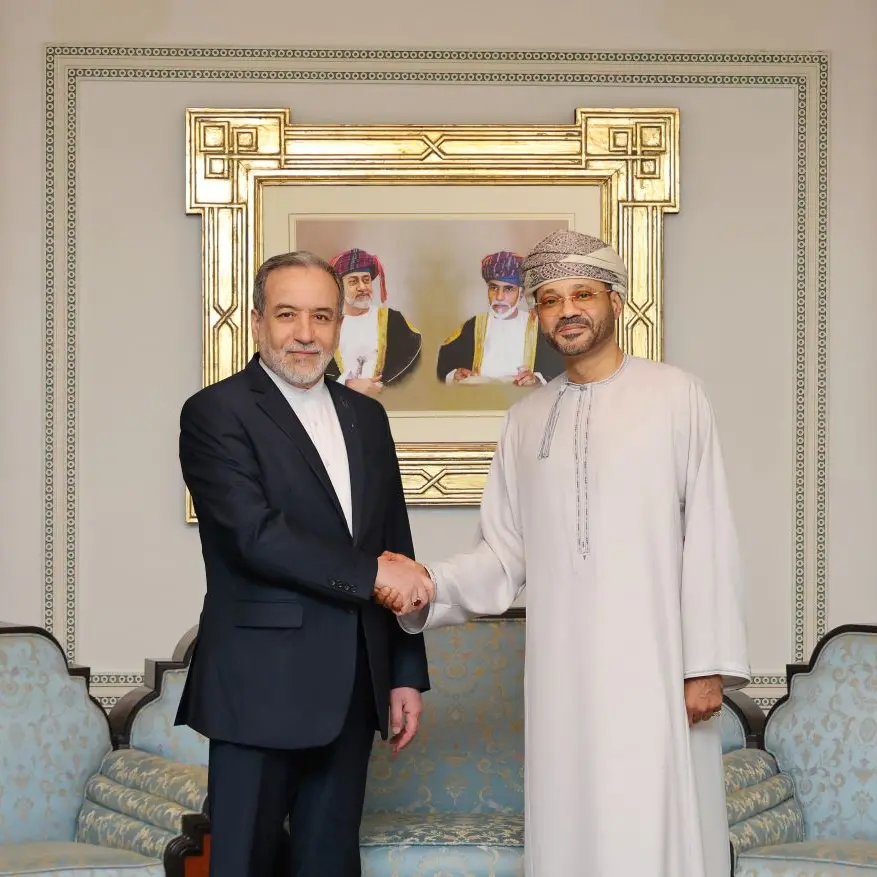
Speaking to Iranian state television in Muscat after Friday’s discussions, Iran’s Foreign Minister Abbas Araghchi said the talks had begun positively. He added that any decision on future rounds would be made after consultations “with the capitals.”
Araghchi acknowledged that mistrust remains high, particularly following US strikes on Iranian nuclear facilities in June during a brief 12-day conflict involving Israel. The attack occurred just days before a previously scheduled sixth round of mediated talks.
US President Donald Trump also described the discussions as “very good” while speaking to reporters aboard Air Force One. He confirmed that additional talks were planned for early next week but warned that “the consequences are very steep” if Iran fails to reach an agreement on its nuclear programme.
“Iran looks like they want to make a deal very badly — as they should,” Trump said, suggesting Tehran may be willing to go further than in past negotiations, though he provided no specifics.
Delegations and Mediation
The Iranian delegation was led by Araghchi, while the US team included special envoy Steve Witkoff, Jared Kushner, and US Central Command chief Brad Cooper.
Oman once again acted as mediator. Omani Foreign Minister Badr bin Hamad Al Busaidi held separate meetings with both sides, relaying messages between them.
“It was useful to clarify both Iranian and American thinking and identify areas for possible progress,” Al Busaidi said, adding that efforts would continue to create conditions for renewed diplomatic and technical negotiations.
Rising Military Tensions
The talks come amid heightened military posturing. The US has deployed the USS Abraham Lincoln carrier strike group closer to Iranian waters, reinforced regional air defences, and recently shot down an Iranian drone.
Trump has repeatedly threatened military action if no agreement is reached.
Washington is demanding that Iran fully halt uranium enrichment — including at the 3.67 percent civilian level permitted under the 2015 nuclear deal, which Trump withdrew from in 2018. Before US strikes in June, Iran had enriched uranium up to 60 percent.
The US is also seeking limits on Iran’s ballistic missile programme and an end to Tehran’s military and financial support for allied armed groups in Iraq, Lebanon, Yemen, and Syria.
European governments and Israel have largely supported Washington’s position.
Iran’s Red Lines
Tehran has maintained that negotiations must focus strictly on nuclear issues and sanctions relief. Iranian officials insist that discussions about ballistic missiles or regional alliances are non-negotiable.
Araghchi reiterated that Iran expects an end to US military threats as part of any agreement.
Meanwhile, Iran’s Islamic Revolutionary Guard Corps (IRGC) unveiled a test launch of the Khorramshahr-4 ballistic missile this week. State media reported that the missile, capable of reaching Israel and US bases in the region, was launched from a mobile platform deployed from an underground facility.
Yadollah Javani, the IRGC’s political deputy, said the missile display was intended to signal that “while we are at the negotiating table, we will not give up our military power.”
Public Reaction Inside Iran
Iranians are closely watching developments, though optimism appears more muted than during earlier rounds of talks last year.
Soroush, a resident of Tehran, said he hopes diplomacy can prevent further escalation.
“War brings fear and anxiety, and it doubles economic pressure,” he said, as the country continues to struggle with soaring inflation.
Others are more pessimistic. Maryam, another Tehran resident, said she believes the opposing positions of the two sides make conflict inevitable.
Some citizens, frustrated by recent unrest and economic hardship, have even expressed support for escalation. Amir, also from Tehran, said the current situation already feels unbearable.
“War is not good, but what we are living through now feels worse in many ways,” he said.
The Iranian government says 3,117 people were killed during nationwide protests last month, blaming “terrorists” and “rioters.” However, the United Nations and international human rights organisations have reported widespread use of lethal force by state authorities and say the actual death toll may be significantly higher.
As diplomatic efforts continue, the region remains on edge, with both sides balancing negotiations against visible military preparations.