
By Desmond Nleya
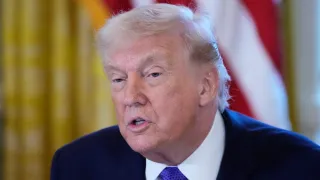
United States President Donald Trump has escalated pressure on Cuba, declaring that no Venezuelan oil or financial support will be allowed to reach the island and urging the communist-run government to strike a deal with Washington.
In a post on his Truth Social platform on Sunday, Trump said: “THERE WILL BE NO MORE OIL OR MONEY GOING TO CUBA – ZERO! I strongly suggest they make a deal, BEFORE IT IS TOO LATE.” He added that Cuba had survived for years on “large amounts of OIL and MONEY from Venezuela.”
Venezuela has long been Cuba’s largest oil supplier, but recent shipping data shows that no cargoes have departed Venezuelan ports for the Caribbean nation following the reported abduction of Venezuelan President Nicolás Maduro on January 3. This comes amid a tightening US oil blockade against the OPEC member state.
Trump did not provide details on what kind of deal he is proposing, but US officials have adopted increasingly confrontational rhetoric toward Havana in recent weeks. Earlier on Sunday, Trump also reposted a message suggesting that US Secretary of State Marco Rubio could become president of Cuba, adding, “Sounds good to me!”
Cuba’s leadership quickly rejected Trump’s statements. President Miguel Díaz-Canel responded on X, saying Cuba is “a free, independent, and sovereign nation” and that “nobody dictates what we do.”
“Cuba does not attack; it has been attacked by the US for 66 years,” Díaz-Canel wrote. “It does not threaten; it prepares, ready to defend the homeland to the last drop of blood.”
Foreign Minister Bruno Rodríguez echoed the defiant tone, insisting that “right and justice are on Cuba’s side.” He accused the United States of acting like an “out-of-control criminal hegemon” that threatens global peace and security. Rodríguez also stressed that Cuba has the right to import fuel from any willing supplier and denied claims that Havana receives financial or material compensation in exchange for providing security services to other countries.
Under a decades-long US trade embargo, Cuba has increasingly depended on Venezuelan oil since 2000, following an agreement forged by former Venezuelan President Hugo Chávez. While Venezuela’s refining capacity has declined in recent years—reducing the volume of oil sent to Cuba—it remains the island’s largest supplier. Last year, Venezuela exported an estimated 26,500 barrels per day to Cuba, covering roughly half of the country’s oil deficit, according to shipping data and internal documents from state oil company PDVSA.
Cuba also imports smaller quantities of oil from Mexico. Mexican President Claudia Sheinbaum said last week that Mexico has not increased its shipments, though political developments in Venezuela have made Mexico an “important supplier” for Cuba.
Reporting from Cúcuta, Colombia, Al Jazeera’s Alessandro Rampietti said Cuba could struggle to replace Venezuelan supplies, especially as it faces one of its worst economic crises in decades.
“The country is experiencing severe shortages, rolling blackouts, declining agricultural output, and a downturn in tourism,” Rampietti said, adding that the loss of Venezuelan oil could further worsen living conditions for ordinary Cubans.
He also noted increased US military activity in the region, with at least two US Navy warships reportedly moving closer to Cuba in recent days, intensifying pressure on the island.
On the streets of Havana, reactions were mixed. Some residents voiced defiance, while others expressed frustration over worsening shortages.
“There’s no electricity, no gas, no liquefied gas,” said Maria Elena Sabina. “The government needs to make a decision quickly because it’s the people who are suffering.”
Another resident, Luis Alberto Jimenez, said he was unfazed by Trump’s threats. “That doesn’t scare me at all,” he said. “The Cuban people are prepared for anything.”
US political analysts say Trump’s comments reflect a broader desire within his administration to see political change in Cuba. Republican strategist Eli Bremer told Al Jazeera that Cuba remains a strategic concern for Washington due to its proximity to Florida and its ties with US rivals such as China and Venezuela.
“Even if Trump says he’s not pursuing regime change, it’s clear he wants a different kind of Cuba—one that could eventually become a trading partner and ally of the United States,” Bremer said.
Meanwhile, in Washington, Al Jazeera correspondent Patty Culhane reported that many Americans are questioning the administration’s foreign policy priorities.
“There is a major affordability crisis in the US—food, housing, healthcare are all expensive,” she said. “Trump campaigned on ‘America First,’ but his growing military engagements abroad are causing unease, even within his own base.”